

 The Home Growns
DIY System 4: Add a Constructed Wetland Side Channel
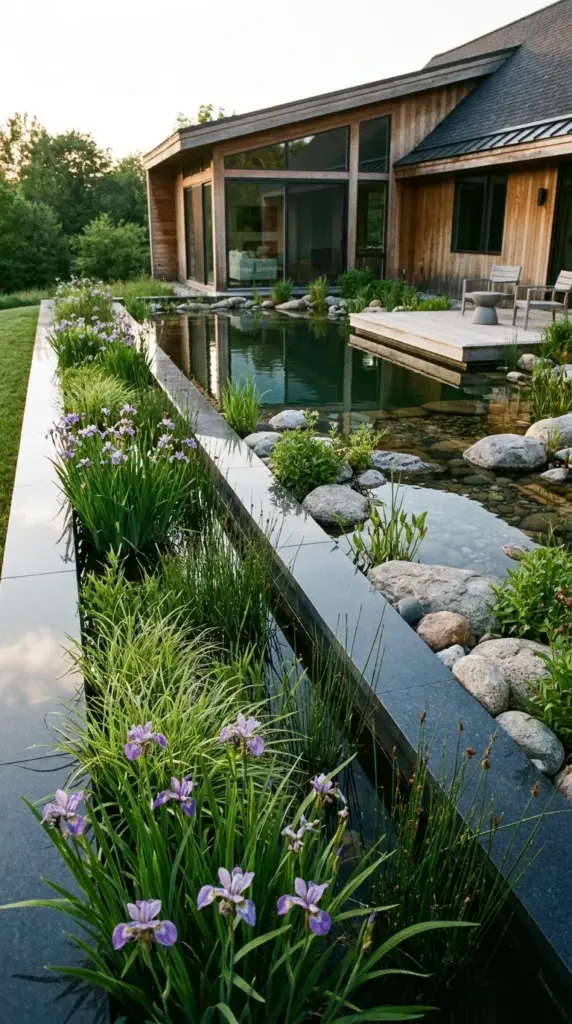
A constructed wetland filter looks elegant and works as a polishing stage that feels fully integrated with the landscape. I love it for narrow lots where a side strip is easier than a giant square basin.
How the side channel works
Water gets routed through a long planted trench or side basin before returning to the pool. That slow pass gives roots, gravel, and microbes time to pull out nutrients and fine particles.
It’s basically a stretched-out biofilter. The longer path can improve contact time without making the yard feel crowded.
Design it to match your yard
Modern yards do well with clean stone edges and linear channels. Rustic gardens can lean into boulders, gravel beaches, and softer curves.
I’ve seen this style look amazing next to cedar decks and awful next to cramped fencing. Proportion matters more than people think.
Choose reliable wetland plants
Use tough wetland plants that can handle wet feet and full sun. Sedges, soft rush, sweet flag, iris, and native marsh plants are usually more dependable than fussy ornamentals.
A mixed root structure helps. Thin roots and thick roots together create more microbial habitat.
Prevent stagnant areas
Keep a gentle slope, avoid sharp dead-end corners, and place returns so water actually travels the full channel. Stagnant pockets hurt algae prevention and can make a pretty system act gross.
The side-channel look is sleek, but debris still needs to be trapped earlier. Click the next button below, because the intake bay setup handles the mess before it gums up the beautiful parts.

GIPHY App Key not set. Please check settings