

 The Home Growns
Before You Build: Space, Budget, and Local Rules
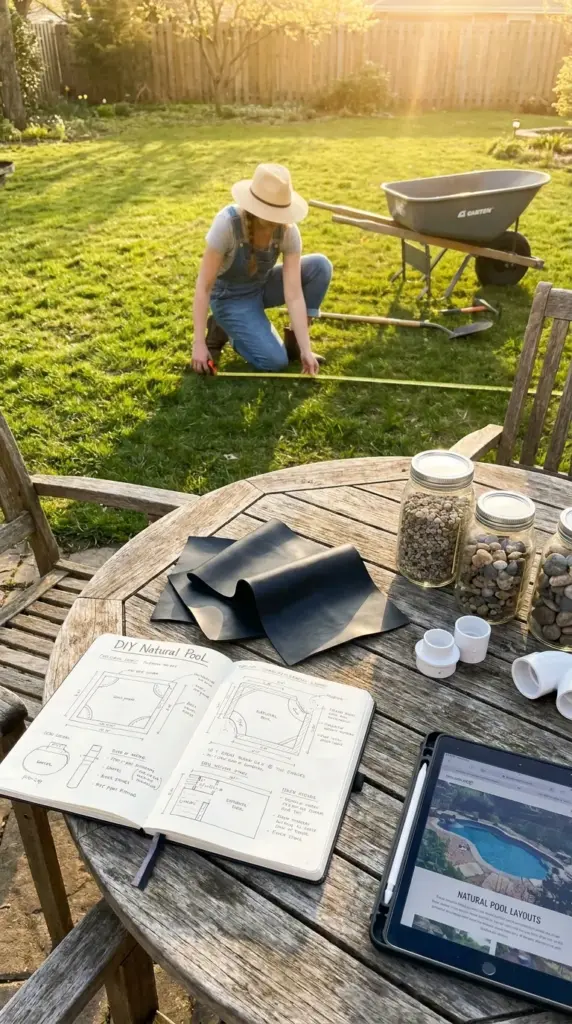
This is the unsexy part, but it saves money. I always tell people that the prettiest pool on Pinterest means nothing if your site drains badly or your city hates the layout.
Measure your space honestly
A true swimming pond design usually needs more room than a conventional pool because filtration takes space. If you want a low-tech setup, expect the regeneration zone or planted filter bed to take roughly 30% to 50% of the swim surface area.
If you’re retrofitting a small existing pool, you’ll likely need a hybrid setup instead. That usually means a compact bog filter, skimmer loop, or side-channel filter instead of a giant planted shelf.
Set a real DIY budget
A modest DIY build can start around a few thousand dollars for liner, gravel, plumbing, pump, and plants. A larger custom build with EPDM liner, edging stone, and upgraded pumps can jump quickly into five figures.
The sneaky costs are freight, gravel volume, and valves. I swear, pool plumbing DIY projects always need “just one more fitting,” and somehow that fitting costs more than lunch.
Check permits and safety rules
Many areas require fencing, gate hardware, setback distances, or electrical inspections. Drainage laws matter too, especially if overflow can run toward a neighbor’s lot or public storm system.
If kids visit your home, plan barriers first. Pretty water still needs hard safety thinking.
Decide on liner and structure basics
Most DIY builds use a pond liner or EPDM liner over compacted soil with waterproof underlayment. If you want stone shelves, intake chambers, or plant ledges, design those now, not after the liner is down.
Trust me, retrofitting a plant shelf after filling the pool is a special kind of frustration. Click the next button below, because once the layout is locked in, the water-cleaning science starts making the whole project feel way less intimidating.

GIPHY App Key not set. Please check settings