

 The Home Growns
DIY System 1: Build a Regeneration Zone with Aquatic Plants
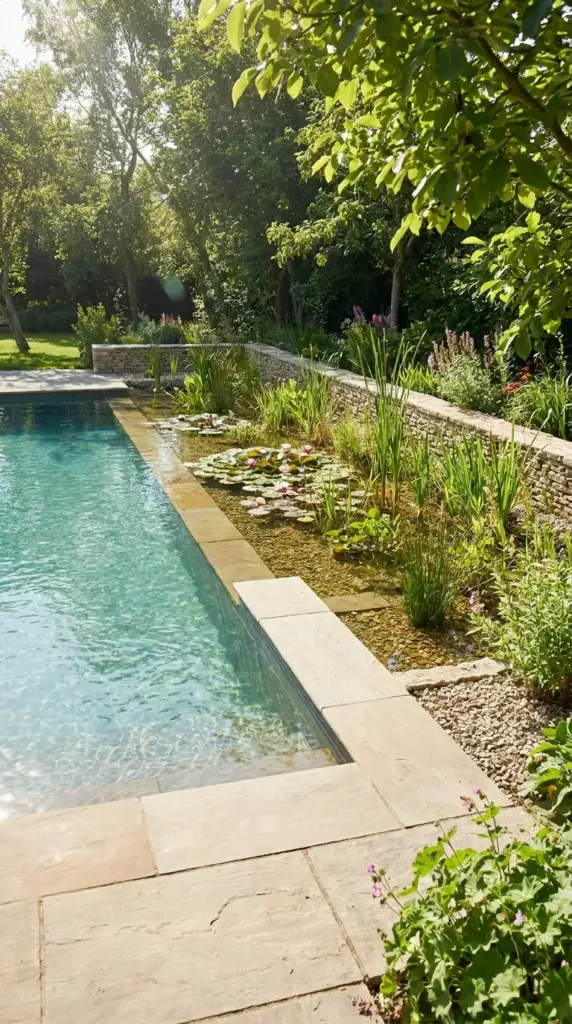
If you want the classic natural-pool look, this is the star. A regeneration zone is a planted section where water moves slowly through gravel and roots before returning cleaner to the swim area.
Choose the right layout
You can build the zone beside the pool, around the perimeter, or in a separate chamber linked by plumbing. A side basin is usually easiest for DIYers because it’s simpler to control flow and plant density.
Perimeter shelves look amazing, but they steal swim space. Separate chambers are my favorite when families want the clean look of a standard pool with hidden filtration.
Pick plants that actually help
Use a mix of marginal plants, oxygenating plants, and vigorous rooters. Think rushes, sedges, iris, pickerel, arrowhead, and region-appropriate reeds.
I avoid stuffing in only decorative plants. Cute matters, sure, but roots that move water and host microbes matter more.
Build the gravel zone correctly
A planted zone usually uses washed gravel in layers, often with larger stone around intake areas and smaller gravel around roots. Depth often lands around 12 to 18 inches, depending on plant choice and flow design.
An undergravel distribution line helps prevent dead spots. If water only races through one corner, the whole thing underperforms.
Size it for success
For low-chemical or no-chemical designs, a regeneration area of 30% to 50% of the swim area is a common target. Smaller zones can work, but usually only with stronger support from skimmers, pumps, and extra filter stages.
This system is beautiful, but it’s not always the easiest first build. Click the next button below, because the next option gives you similar plant-powered cleaning in a simpler, more forgiving package.

GIPHY App Key not set. Please check settings