

 The Home Growns
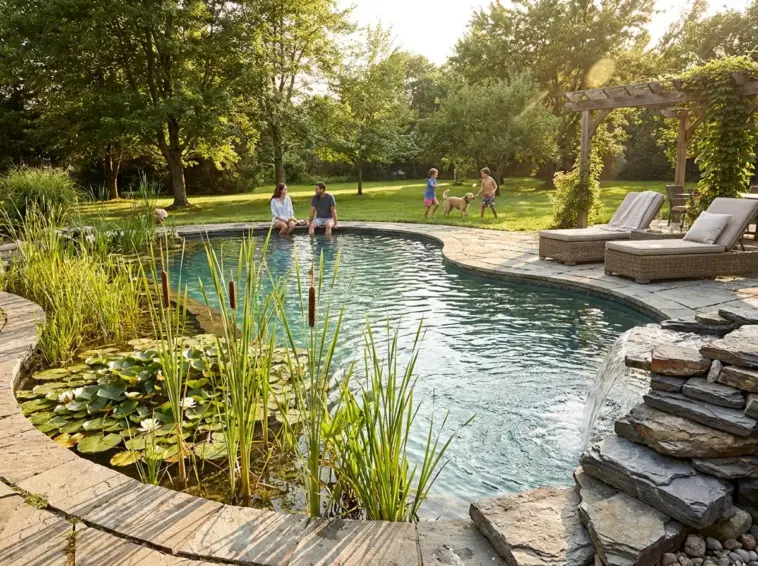
If you’ve been dreaming about a chemical-free pool that looks more like a luxe garden escape than a blue plastic tub, you are so not alone.
Going into summer 2026, I’m seeing more homeowners lean toward natural swimming pool ideas that mix clean water, lower chemical use, and prettier backyard design.
I love this style because it feels softer, calmer, and honestly more alive.
But I’ll be real with you too: a DIY pool filtration setup only works when the system is planned well, not when we just toss in a few plants and hope for the best.
Why Natural Pool Filtration Is Having a Moment in 2026
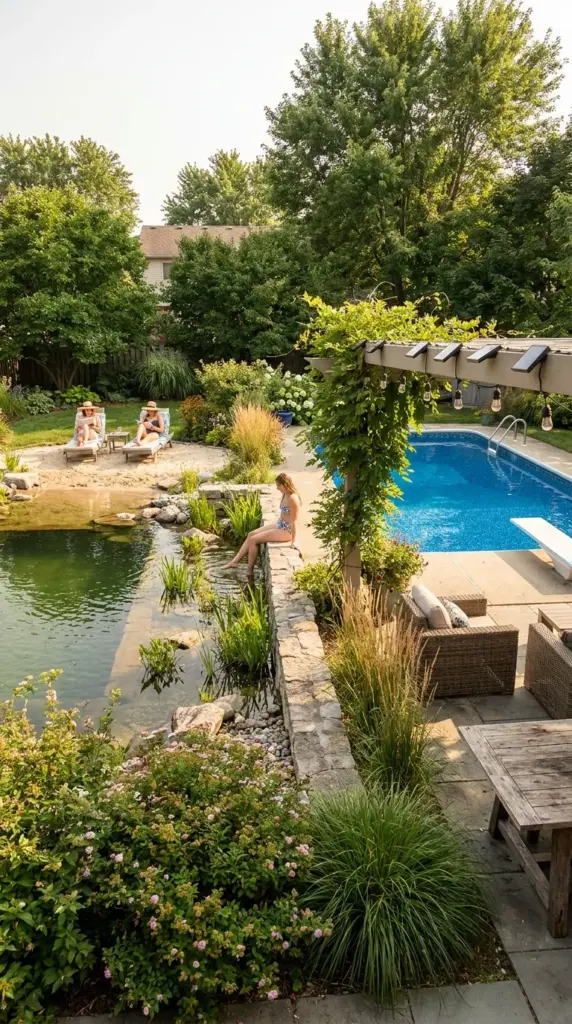
I’ve watched natural pools go from “super niche” to “wait, can I do that in my backyard?” in a few short years. The big shift now is that people want a pool that works with nature, not against it.
Why more homeowners are switching
People are chasing lower chemical exposure, lower long-term inputs, and a more eco-friendly backyard pool look. It also helps that garden-style pools fit current outdoor design trends way better than stark, bright-blue builds.
I’m also seeing more interest in native wetland plants, wildlife-friendly edges, and quieter equipment. That combo makes a natural pool filter feel more like landscaping and less like utility gear.
Natural pool vs. standard pool
A standard pool relies heavily on sanitizer and tight water chemistry control. A natural swimming pool leans on mechanical prefiltration, biological filtration, circulation, and planted zones to keep water balanced.
That doesn’t mean “no equipment.” It means the work gets shared by a circulation pump, filter media, roots, microbes, and smart water movement.
The biggest pros and cons
The pros are gorgeous looks, softer-feeling water, and less chemical handling. The cons are that setup is fussier, algae can show up fast if sizing is off, and maintenance is more like tending a garden than ignoring a pool.
I learned that last part the hard way. One summer, I treated a planted water feature like a set-it-and-forget-it project, and wow, the green haze humbled me.
What “clear enough to swim” really means
In a good system, you should be able to see the floor clearly in the deep area. Water can look slightly more natural than a chlorinated pool, but it should not look murky, smell swampy, or feel slimy.
That standard matters because every system on this list is trying to hit that sweet spot. Click the next button below, because the planning piece is where most DIY mistakes either get prevented or painfully invited in.

GIPHY App Key not set. Please check settings