

 The Home Growns
DIY System 8: Try Floating Wetland Rafts
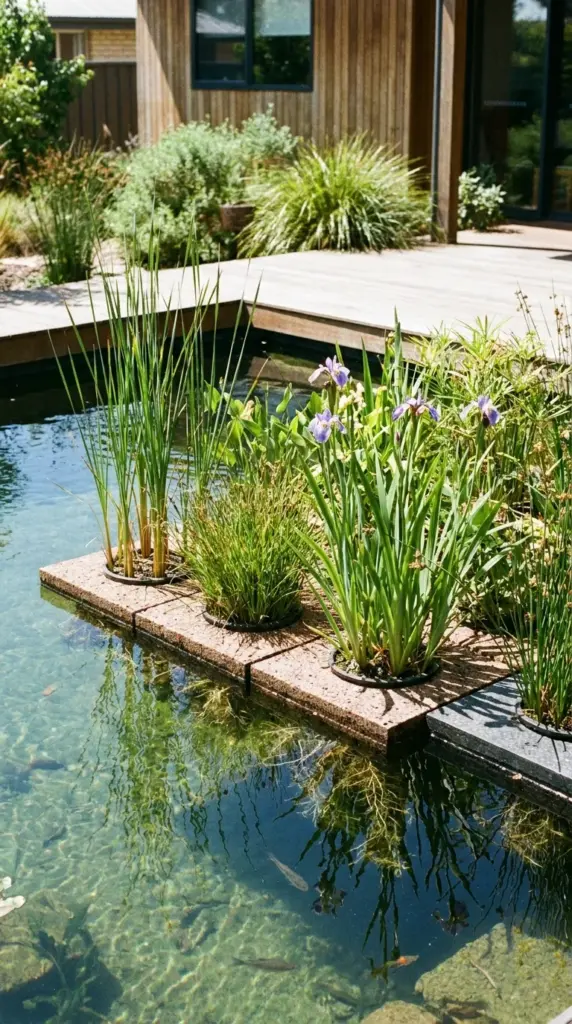
This is the easiest add-on for many existing pools and ponds. Floating wetlands give plant roots direct access to moving water, which helps with nutrient uptake and microbe support.
When rafts make sense
Use them when you already have a pool or pond-like basin and want extra biological help without major construction. They’re especially handy as a seasonal boost during warm months.
I see them used more now in decorative-natural hybrid pools, and honestly, that trend makes sense. They’re flexible and low-commitment.
Build a stable raft
Use closed-cell foam, perforated plant baskets, or raft panels made for aquatic use. The goal is to hold plants securely while letting roots hang below into the water column.
Keep it tidy. A floppy, overloaded raft looks messy fast.
Choose the right plants
Go for shallower-rooted, water-tolerant species that won’t turn into giant top-heavy monsters by July. Soft rush, dwarf sedges, water mint in controlled setups, and other manageable species are easier to live with.
Match plant choice to your climate. A raft that thrives in Seattle may fry in Dallas without shade timing and steady water.
Understand the limits
Rafts are support systems, not full filtration on their own. Pair them with a skimmer, pump loop, or media filter if you want real improvement in water clarity.
They’re easy, but energy use still matters for circulation. Click the next button below, because the next build taps the sun and pairs it with media that works surprisingly hard behind the scenes.

GIPHY App Key not set. Please check settings