

 The Home Growns
Essential Gardening Supplies for Your Organic Mini Farm
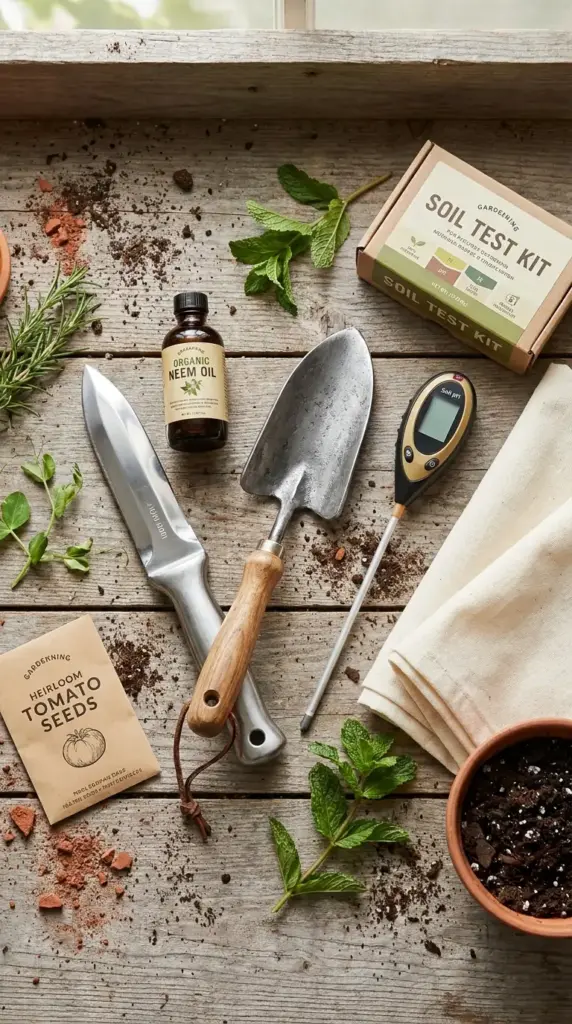
I once walked into a garden center as a beginner and walked out $300 lighter with a cart full of stuff I barely used.
Don’t be me. 😅 Let’s talk about what actually matters.
Must-Have Tools for Working With Clay and Poor Soil
Clay soil is tough on cheap tools — I’ve snapped two flimsy trowels trying to dig into unammended beds.
Invest in quality over quantity here. These are the tools that genuinely earn their keep:
- Broadfork — loosens compacted clay without destroying soil structure
- Hori hori knife — the Swiss Army knife of garden tools, handles planting, weeding, and dividing
- Soil knife or border spade — far more effective than a standard shovel in dense soil
- Stainless steel hand trowel — get a heavy-duty one, not the $4 hardware store version
Soil Testing Kits, pH Meters, and Moisture Gauges
Knowledge is genuinely your most powerful gardening tool. I can’t stress this enough.
A Luster Leaf Rapitest kit (~$15) gives you reliable readings for pH, nitrogen, phosphorus, and potassium all in one box.
For ongoing monitoring, a 3-in-1 soil meter measuring moisture, pH, and light runs about $15–$20 and saves countless plants from over or underwatering.
Digital pH meters like the Apera PH20 (~$35) are more precise if you’re serious about dialing in your soil chemistry.
Organic Pest Control Supplies and Natural Sprays
Chemical pesticides and organic gardening simply don’t mix — and honestly, you don’t need them.
My go-to organic pest control toolkit:
- Neem oil — handles aphids, spider mites, and fungal issues beautifully
- Diatomaceous earth — sprinkle around bed borders to deter slugs and crawling insects
- Insecticidal soap spray — mix 1 tbsp castile soap per quart of water, done
- Row cover fabric — physical barrier against pests, incredibly underrated
Seed Starting Supplies and Where to Find Organic Heirloom Seeds
Starting from seed is so much more rewarding than buying transplants — and significantly cheaper.
Basic seed starting kit:
- 72-cell seed trays with humidity domes
- Organic seed starting mix (not regular potting soil — it’s too dense)
- Full-spectrum grow light (~$35–$50) if starting indoors
For organic heirloom seeds, these sources are genuinely trustworthy:
- 🌱 Baker Creek Heirloom Seeds — incredible variety selection
- 🌱 Seed Savers Exchange — nonprofit, community-focused
- 🌱 Johnny’s Selected Seeds — excellent germination rates
Recommended Brands vs. Budget-Friendly Alternatives
| Item | Premium Pick | Budget Alternative |
|---|---|---|
| Hand trowel | Sneeboer (~$45) | Fiskars (~$12) |
| Watering can | Haws (~$60) | Amazon Basics (~$18) |
| Pruning shears | Felco F-2 (~$55) | Vivosun (~$14) |
| Grow bags | Smart Pots (~$15) | VIVOSUN fabric bags (~$8) |
| Neem oil | Dyna-Gro (~$20) | Garden Safe (~$10) |
Honestly? The budget alternatives work perfectly fine when you’re just starting out. Upgrade gradually as you learn what you actually use.
Building Your Supply Kit Gradually Without Breaking the Bank
Here’s my honest advice — start with just five things:
- A quality hand trowel
- A basic soil test kit
- Neem oil
- Seed trays and grow lights
- A broadfork or border spade
Add tools as specific needs arise rather than buying everything upfront. Your garden will tell you what it needs as you grow.
Check Facebook Marketplace, thrift stores, and local Buy Nothing groups for secondhand tools — I’ve scored nearly-new broadforks for $5. People give up gardening all the time and their tools are just sitting in garages. 🙌
Next up — I’m sharing the year-round garden care routines that keep a mini farm thriving through every season, including the one fall task most beginners completely skip. 🍂 You’ll definitely want to read this one!

GIPHY App Key not set. Please check settings