

 The Home Growns
Organic Fertilizing Strategies for Low-Nutrient Soil
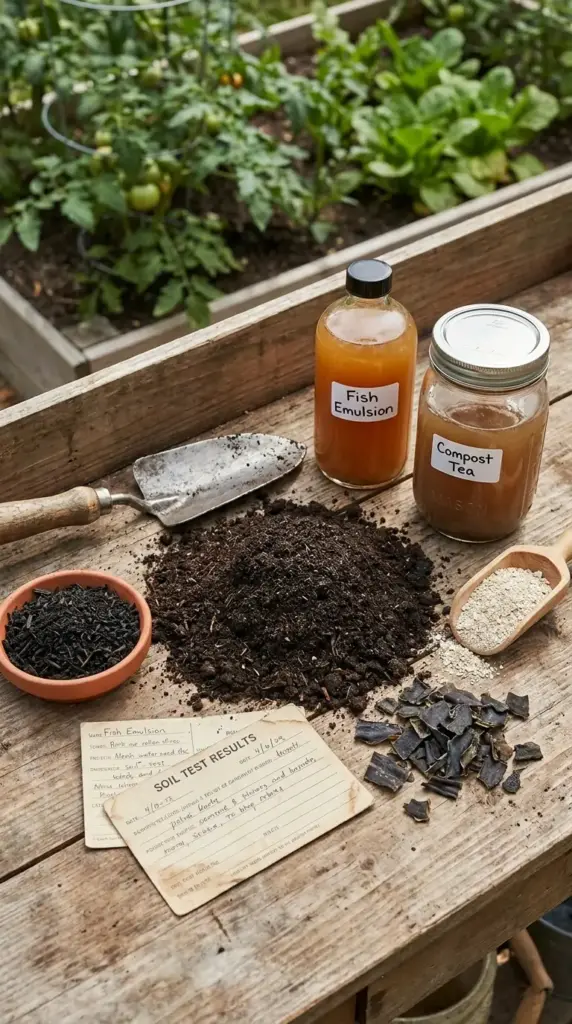
I once killed an entire bed of tomatoes by over-fertilizing them.
More is better, right? Wrong. So very, painfully wrong. 😅
Understanding NPK and What Your Poor Soil Is Missing
NPK stands for Nitrogen, Phosphorus, and Potassium — the three nutrients every plant needs to survive and thrive.
Poor and clay soils are typically low in nitrogen and phosphorus but can actually hold potassium reasonably well due to their dense mineral content.
A basic soil test (seriously, $10 at any garden center) will tell you exactly what’s missing so you’re not just guessing.
The Best Organic Fertilizers for Low-Nutrient Soil
These are my personal ride-or-die amendments:
- Worm castings — gentle, slow-release, and virtually impossible to over-apply
- Fish emulsion — fast-acting nitrogen boost, smells terrible, works beautifully
- Compost tea — liquid gold for soil biology and root development
Fish emulsion in particular shows results within days. Just… apply it when your neighbors aren’t outside. 😂
DIY Compost Bin: Make Your Own Fertilizer at Home
You don’t need anything fancy. A $20 plastic storage bin with drilled holes works perfectly as a starter compost bin.
Layer “greens” (kitchen scraps, coffee grounds, grass clippings) with “browns” (cardboard, dried leaves, paper). Aim for roughly a 3:1 brown-to-green ratio for fastest decomposition.
Turn it every week or two and you’ll have rich, dark compost in about 8–12 weeks. It’s genuinely satisfying watching garbage turn into garden gold.
Feeding Schedules Through the Growing Seasons
- 🌱 Spring — Heavy compost application, fish emulsion every 2 weeks to kickstart growth
- ☀️ Summer — Compost tea weekly, worm castings around fruiting plants
- 🍂 Fall — Slow-release amendments only, begin building next season’s soil
- ❄️ Winter — Let cover crops and mulch do the quiet, invisible work
Avoiding Over-Fertilization — Yes, It’s Real
Nitrogen burn looks like yellowing leaf edges and crispy tips — and it happens faster than you’d think.
Always follow recommended application rates and when in doubt, apply less than you think you need. You can always add more.
Organic Slow-Release Options That Work Overnight
Bone meal, kelp meal, and feather meal are incredible set-it-and-forget-it amendments.
Work them into your soil at the start of each season and they’ll quietly feed your plants for months without any extra effort on your part.
Up next — I’m tackling one of the biggest frustrations clay soil gardeners face: drainage and watering. I’ve got some surprisingly simple fixes that’ll save your plants and your sanity. 💧


GIPHY App Key not set. Please check settings