

 The Home Growns
Watering Smart: Drainage Solutions for Clay-Heavy Gardens
My first spring garden looked less like a farm and more like a small decorative pond.
Standing water everywhere, seedlings floating, me crying into my coffee. ☕ Clay soil and poor drainage are genuinely humbling.
Why Clay Soil Causes Waterlogging — And How to Fix It
Clay particles are microscopic and pack together tightly, leaving almost no space for water to move through.
The result is waterlogged roots, oxygen deprivation, and root rot — basically the trifecta of garden disaster.
The fix isn’t complicated though. Improving soil structure organically combined with smart drainage solutions solves most waterlogging problems within one season.
Installing Simple French Drains or Swales
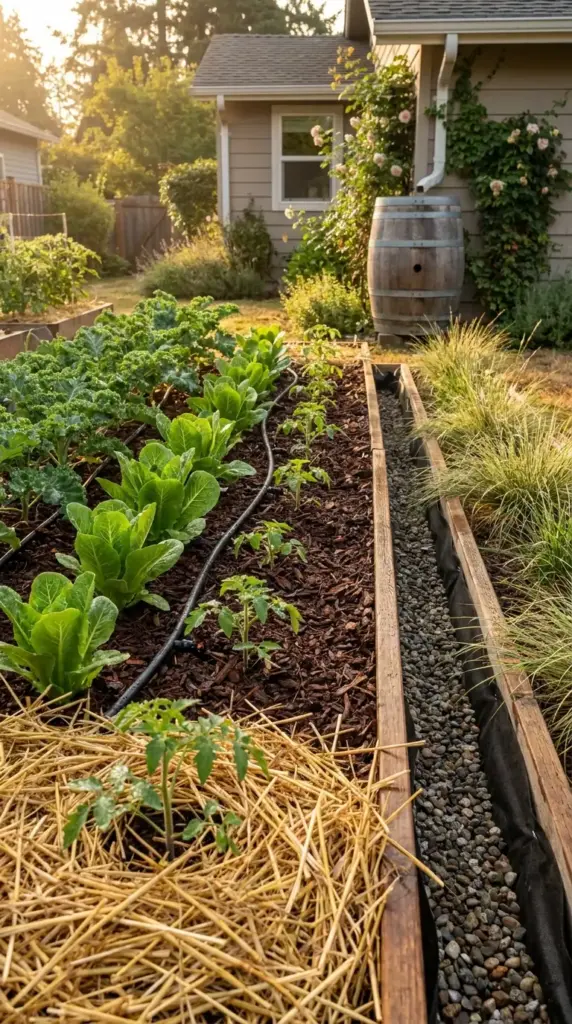
A French drain sounds intimidating but it’s really just a gravel-filled trench that redirects water away from your garden beds.
Dig a trench about 12 inches deep and 6 inches wide, line it with landscape fabric, fill with gravel, and cover. Done.
Swales — shallow, curved channels along garden borders — work beautifully for larger backyard spaces and are honestly kind of pretty when planted with ornamental grasses along the edges.
Drip Irrigation vs. Hand Watering for Mini Farms
Hand watering feels therapeutic. I get it. But it’s wildly inefficient for a productive mini farm.
Drip irrigation delivers water directly to root zones, reducing evaporation by up to 50% and virtually eliminating fungal issues caused by wet foliage.
A basic drip system for a 4×8 raised bed costs around $25–$40 and pays for itself in water savings within one season. Absolutely worth it.
Mulching Strategies That Regulate Moisture and Suppress Weeds
Mulch is basically a moisture insurance policy for clay soil gardens.
A 3–4 inch layer of straw, wood chips, or shredded leaves dramatically slows evaporation and keeps soil temperature stable during summer heat.
As a bonus — organic mulch breaks down over time and continuously feeds your soil biology. It’s genuinely one of the highest-return, lowest-effort things you can do.
Rainwater Harvesting for Eco-Conscious Urban Gardeners
A basic 50-gallon rain barrel connected to a downspout costs around $80–$120 and can collect thousands of gallons annually.
In cities like Seattle or Minneapolis, rainwater harvesting is practically a no-brainer given seasonal rainfall patterns.
Rainwater is also naturally soft and slightly acidic — which most vegetables actually prefer over treated municipal water.
Watering Schedules by Season and Climate Zone
| Season | Frequency | Notes |
|---|---|---|
| Spring | Every 2–3 days | Monitor rainfall closely |
| Summer | Daily or every other day | Early morning only |
| Fall | Every 3–4 days | Reduce as temps drop |
| Winter | Minimal | Let dormancy do its thing |
Gardeners in Atlanta and DC should water more frequently in summer than those in Seattle or Minneapolis due to humidity and heat differences.
Next up — we’re getting into the fun part. I’m sharing how to design a mini farm that’s so gorgeous your neighbors will actually stop and stare. Beautiful and productive? Oh yes. 🌿✨

GIPHY App Key not set. Please check settings