

 The Home Growns
Choosing Between Dry-Laid and Mortared Brick Borders
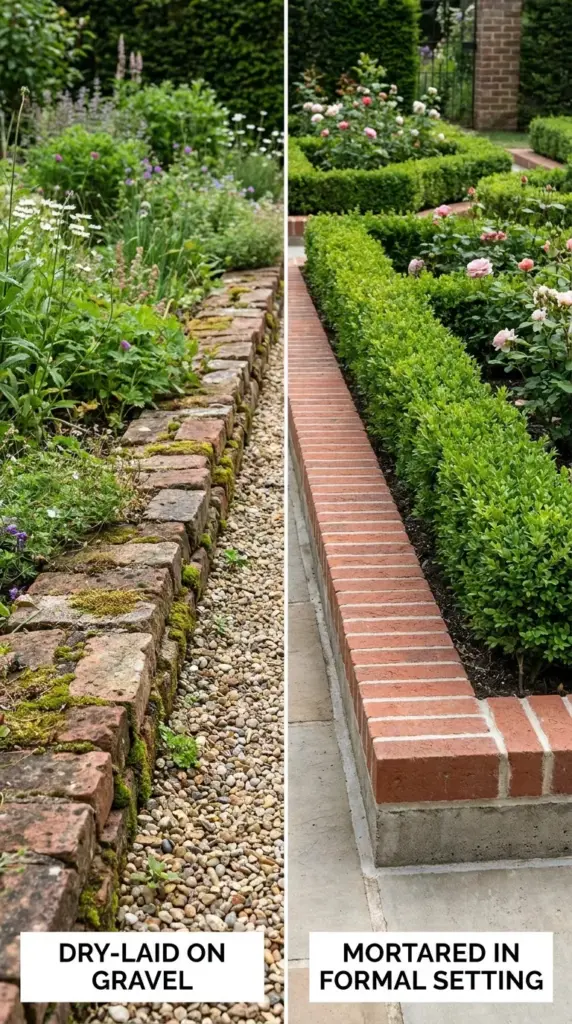
Dry-laid is usually best for beginners
A dry-laid border means the bricks sit on a prepared base without mortar locking them together.
For most edging for flower beds, this is the easiest method to install, adjust, and repair. It also handles slight ground movement better.
Mortar can look formal but adds complexity
A mortared border gives a more fixed, architectural look.
That can be great in a highly structured front yard brick edging design, but it’s less forgiving if the ground shifts or the layout wasn’t perfect to begin with.
Maintenance is different for each method
Dry-laid borders may need an occasional reset of a loose or sunken section.
Mortared borders can crack, and once that happens, repairs are more obvious and usually more annoying. I’ve learned the hard way that “permanent” is sometimes just a fancy word for “harder to fix.”
Match the method to the site
If the border is mostly decorative and sits in stable, well-drained ground, dry-laid is often enough.
If you’re bordering a patio edge or want a formal hardscape tie-in, mortar may make sense. Either way, the tools you use can make this job feel smooth or miserable, so hit the next button below.

GIPHY App Key not set. Please check settings