

 The Home Growns
Drainage Problems That Can Ruin the Whole Border
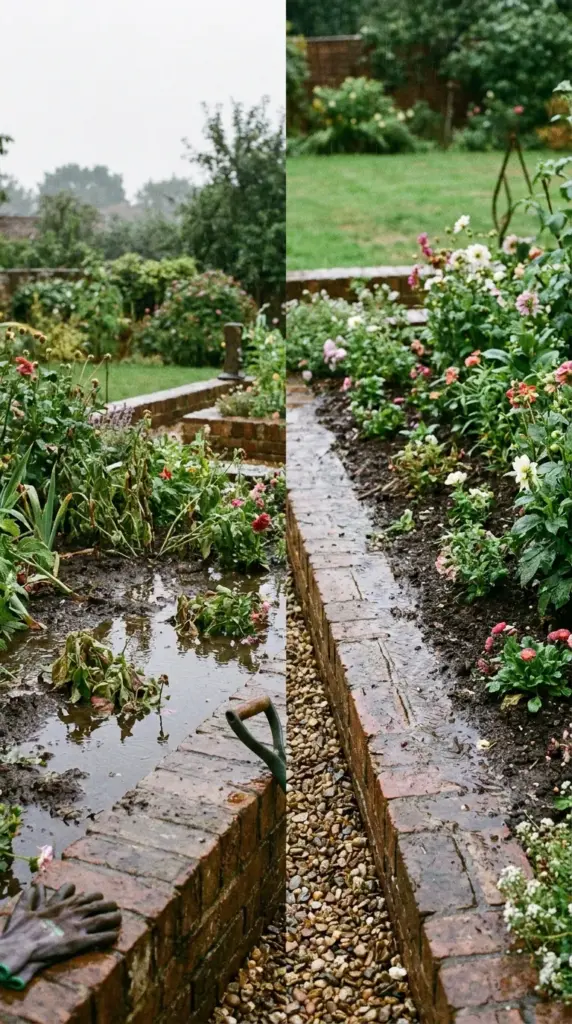
Water always wins if you ignore it
A lot of brick border mistakes come down to bad drainage.
If water collects along the edge, it softens the soil, washes out the base, and makes bricks tilt, sink, or spread apart.
Slope matters more than most beginners think
A gentle drainage slope helps move water away instead of trapping it at the border.
This matters even more near downspouts, low spots, and heavy mulch beds. If your soil stays soggy for days, your border is already telling you something.
Frost heave is real in colder climates
If you live where winter freeze-thaw cycles happen, frost heave can push bricks upward and out of line.
That’s why base prep and drainage work together. Water trapped under the border expands in cold weather, and then your pretty edging starts looking like crooked teeth by spring.
Quick fixes only go so far
Yes, you can patch a low spot or reset a loose brick.
But if the real problem is standing water, you may need to regrade, redirect runoff, or rethink the route entirely. Once drainage is handled, the next challenge is making the border look neat instead of homemade-in-a-bad-way, so hit the next button below.


GIPHY App Key not set. Please check settings