

 The Home Growns
Watering and Mulching for Bigger Blooms in Low Light
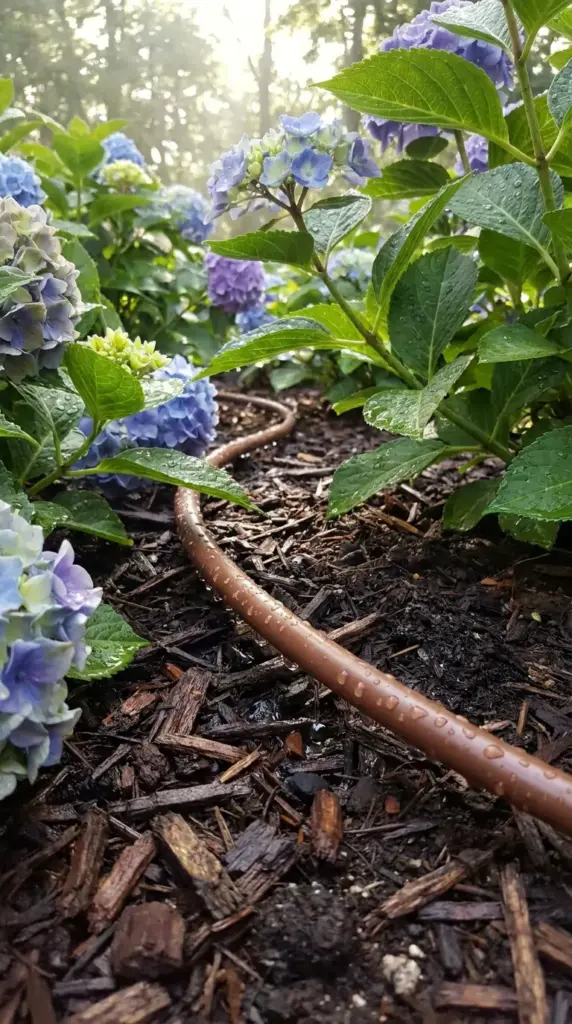
Shade does not cancel out water needs
People see shade and assume the plants need less water. Sometimes that’s true at the surface, but under trees or beside foundations, a hydrangea watering schedule still matters a lot.
Hydrangeas forming buds or blooms need steady moisture. If they dry out repeatedly, flower production and leaf quality can drop fast.
Deep watering beats frequent sprinkles
I prefer deep watering that soaks the root zone rather than quick shallow passes. A slow hose, soaker line, or drip irrigation system keeps roots moving downward where the soil stays more stable.
This is also one of the biggest gardening trends I’ve seen lately, and I’m into it. Smart watering saves time, reduces waste, and helps keep fungal issues down.
Mulch is your bloom insurance
A consistent mulch layer helps regulate soil temperature, reduce evaporation, and soften competition from tree roots. In shade beds, I keep mulch fresh but not piled thick like a volcano.
Morning watering is still the safest choice. Wet leaves sitting overnight in low-airflow shade can invite disease, and nobody has time for that mess.
Water is only half the story, so hit the next button below, because feeding a shade hedge the wrong way is a classic reason you get leaves instead of flowers.

GIPHY App Key not set. Please check settings