

 The Home Growns
Prep the Soil So Shade Doesn’t Turn Into Soggy Trouble
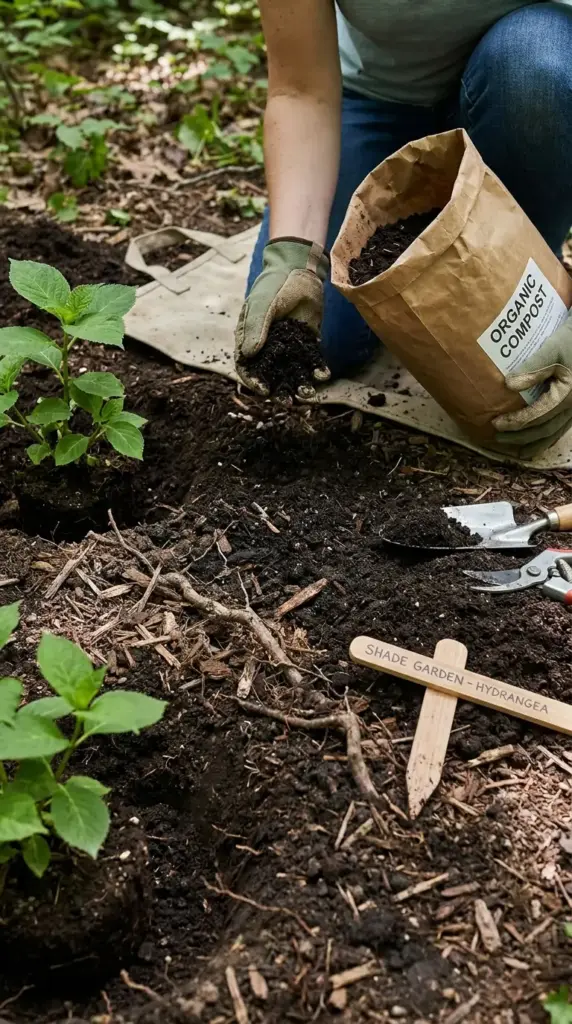
Hydrangeas want moisture, not swamp conditions
A lot of shady beds stay cool and damp, which sounds perfect until roots sit in soggy soil for too long. Hydrangeas like evenly moist, well-draining soil with lots of organic matter.
I amend with compost to improve structure, but I don’t create a bathtub by over-digging a slick clay hole. Been there, regretted that.
Tree roots are the hidden enemy
Under mature trees, the issue is often not too much water. It’s that tree roots steal water and nutrients before your hydrangeas can grab them.
That’s why a hedge under maples can stay thin even when you water faithfully. The soil may look shaded and moist on top while the root zone is actually competitive and dry.
Soil pH matters mostly for bloom color, not survival
With bigleaf hydrangeas, acidic soil can push blooms bluer, while more alkaline soil leans pink. That’s fun if color matters to you, but I don’t obsess over it until the plants are healthy and settled.
First I fix drainage, moisture balance, and root competition. After that, I play with color tweaks.
Soil prep sets the stage, but the next button below gets into planting day, and that’s where a shade hedge either gets a strong start or a very cranky one.

GIPHY App Key not set. Please check settings