

 The Home Growns
Design the Hedge So It Looks Full, Not Leggy
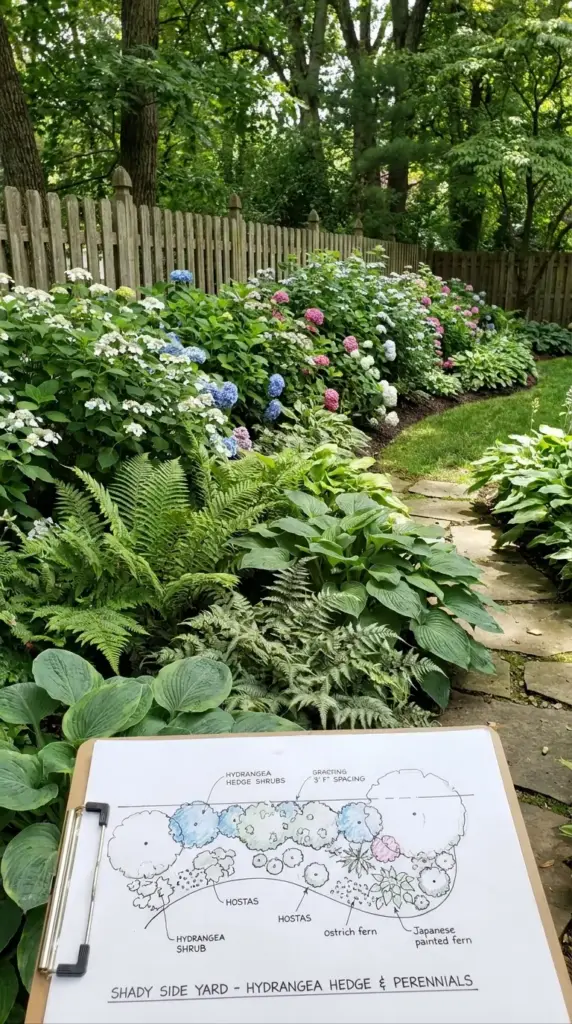
Space for mature width, not nursery pot size
This is huge. A one-gallon hydrangea looks tiny, and that tempts people to cram plants too close together.
I try to space based on mature width, not the adorable size sitting in the cart. For a fuller hedge, I’ll plant slightly closer than full mature spread, but never so close that airflow disappears.
Use staggered rows when you have room
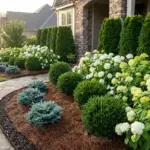
If you’ve got the depth, a staggered double row creates instant richness. It’s especially useful in suburban side yards where you want privacy and softness without a hard hedge line.
Even a gentle zigzag pattern can hide gaps better than a strict straight line. It reads lush, not rigid.
Curves and layering make shade feel intentional
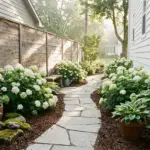
Straight lines can emphasize every thin spot. A subtle curve, wider bed edge, or layered front row with hostas, ferns, or heuchera makes the hedge look fuller even before the shrubs mature.
That trick has saved a few of my own less-than-perfect plantings. Honestly, design can cover a multitude of gardening sins.
Good design helps, but if you hit the next button below, I’ll show you why the soil under a shady hedge can make or break bloom performance.

GIPHY App Key not set. Please check settings