

 The Home Growns
Check Your Light Before You Buy a Single Plant
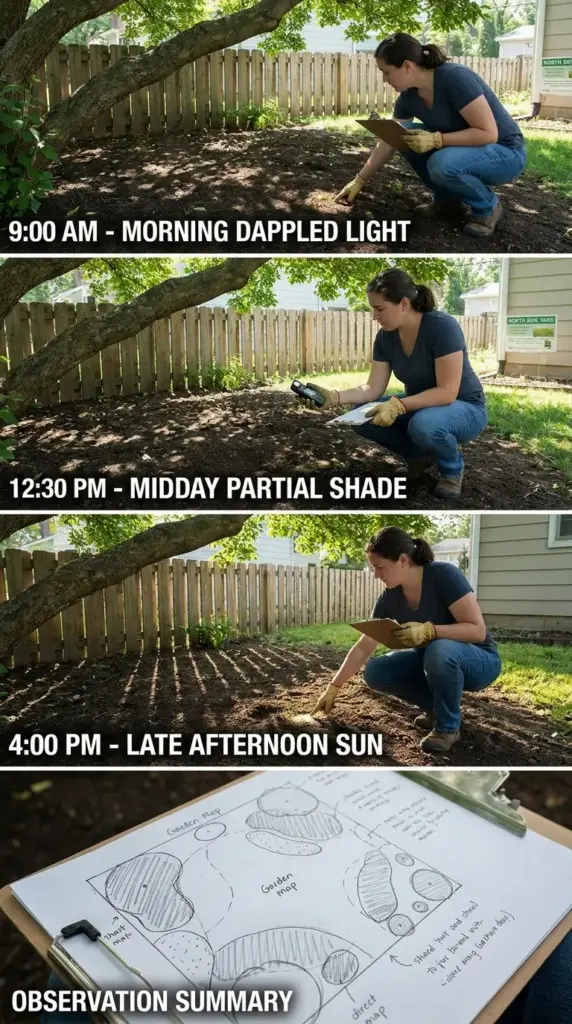
Measure light like a realist, not an optimist
I always tell people to watch the space at 9 a.m., noon, 3 p.m., and 6 p.m. for a few days. Shade shifts fast, especially in city lots, fenced yards, and under deciduous trees.
What looks bright from the kitchen window may still be too dark for a heavy-blooming hedge. That one stings a little, but it saves money.
Know the difference between bright shade and gloomy shade
Bright shade has ambient light and maybe filtered sun through open branches. Gloomy shade is the kind under maples, beside tall fences, or along the north side of a house where light barely reaches the soil.
Hydrangeas can often manage bright shade. Gloomy shade is where you need the toughest, most shade-adapted types or a design shift.
Use a simple yes-or-no test
If the spot gets at least some morning light or dappled sun, I’ll consider oakleaf, mountain, or certain bigleaf hydrangeas. If it stays dim all day, I lean harder toward oakleaf for shrubs or climbing hydrangea for vertical coverage.
If you want nonstop flowers in a site that never gets meaningful light, I’d rather tell you the truth now than let you waste a season. Sometimes the smartest move is adjusting the plan, not forcing the plant.
Now that you know your light level, hit the next button below, because variety choice is where a shady hedge either succeeds beautifully or falls apart fast.

GIPHY App Key not set. Please check settings