

 The Home Growns
A Simple Year-Round Care Calendar for Shade Hydrangea Hedges
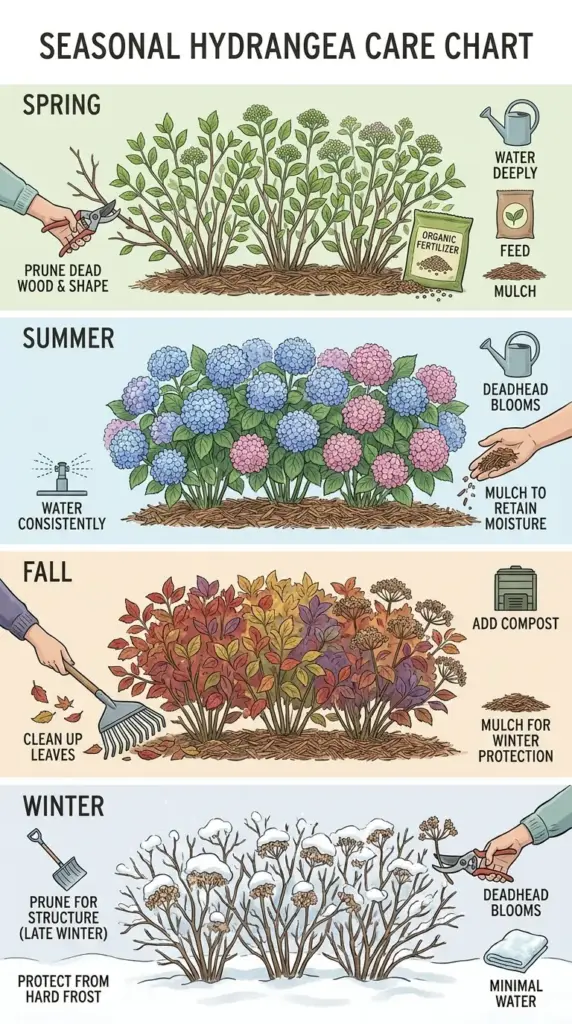
Spring tasks
In spring, I check winter damage, refresh mulch, top-dress with compost, and feed lightly if the hedge needs it. This is also the time to monitor moisture as temperatures rise and trees start leafing out.
If I’m growing smooth hydrangeas, I do structural pruning before active growth takes off. For old-wood types, I prune very cautiously.
Summer tasks
Summer is all about deep watering, watching for wilt, and avoiding stress swings that reduce flowering. If blooms are heavy, I may add discreet support or thin a few weak stems next season.
This is also when I pay attention to whether the site is darker than I realized. Tree canopies tell the truth by midsummer.
Fall and winter tasks
In fall, I keep watering during dry spells, especially for newer hedges. I clean up diseased leaves, but I don’t go wild cutting everything back.
In winter, I mostly leave old-wood types alone except for dead material. Then I plan any transplanting, spacing corrections, or canopy edits for the next year.
How long fullness really takes
A full hydrangea hedge usually takes 2 to 4 years to look established, depending on size at planting, variety, moisture, and light. I know that’s not instant-gratification news, but it’s the honest answer.
When the setup is right, the payoff is so worth it. That first season when the hedge finally knits together and blooms well in shade feels ridiculously satisfying.



GIPHY App Key not set. Please check settings