

 The Home Growns
Fertilizing for Flowers, Not Just Leafy Growth
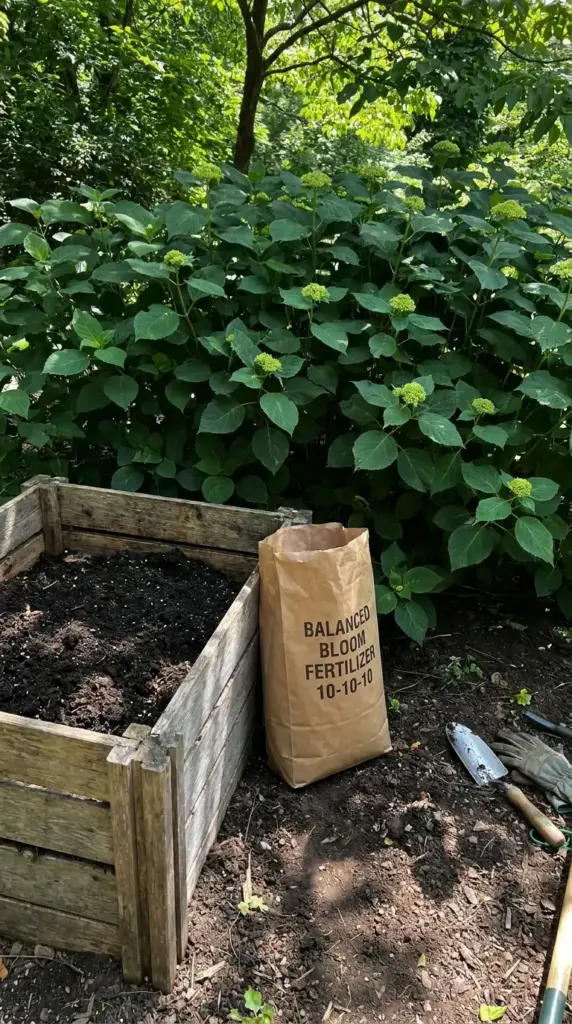
Too much nitrogen is a sneaky problem
Rich shady beds already encourage leafy growth. If you pile on a high-nitrogen fertilizer, you can end up with gorgeous green shrubs and barely any blooms.
That combo looks healthy from far away, which is why it fools so many people. I’ve absolutely been one of them.
Feed lightly and on purpose
I prefer compost plus a balanced or bloom-supportive fertilizer in spring, especially for established hedges. I don’t like forcing lots of soft new growth in deep shade because it often turns floppy.
Less is often more here. You’re supporting the plant, not trying to hype it up like a pre-workout drink.
Know when to stop feeding
I avoid late-season fertilizing once the plant should be winding down. Tender growth heading into stress, heat, or winter is just asking for trouble.
If the shrub is green, growing, and holding leaves well, I don’t chase perfection with extra fertilizer. Healthy rhythm beats over-management every time.
Nutrition matters, but hit the next button below, because pruning is where even experienced gardeners accidentally remove every future flower without realizing it.



GIPHY App Key not set. Please check settings