

 The Home Growns
Do the structural basics right or the fence will fail early
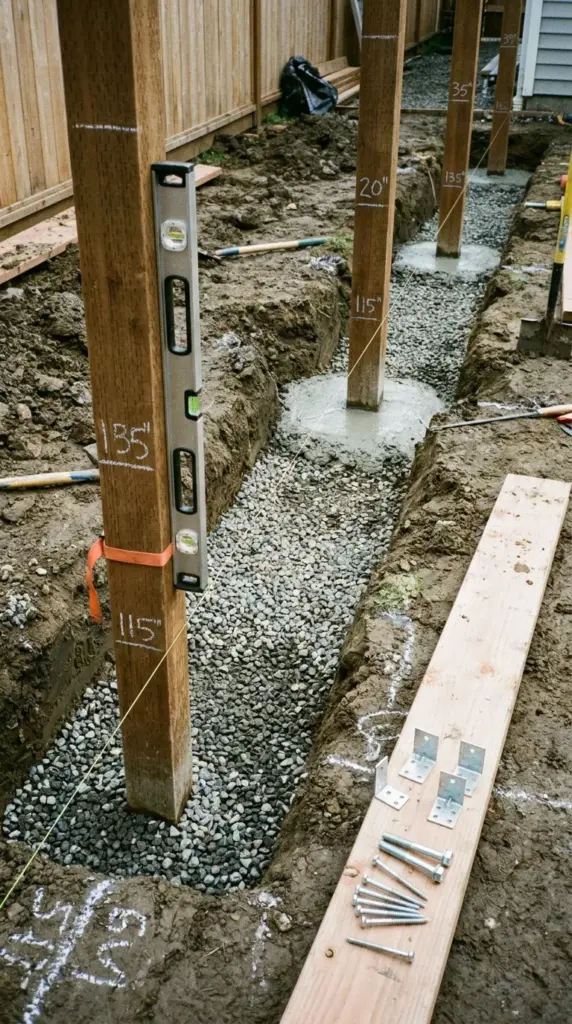
Post depth matters more than most people think
A common rule of thumb is to bury about one-third of the post length, though frost depth, soil, and local code may change that.
If your posts are too shallow, the fence may lean, wobble, or shift after heavy rain and wind.
That is not a cosmetic issue.
That is a rebuild issue.
Spacing, fasteners, and footing choices
Proper post spacing helps panels stay straight and reduces stress on rails and pickets.
Using the wrong fasteners can lead to rust streaks, weak connections, and early failure, so I always lean toward galvanized or exterior-rated hardware.
As for concrete footings, people argue about methods forever.
I won’t pretend there’s one magic answer for every yard, but drainage matters a ton, especially in wet climates and freeze-thaw zones.
Soil and drainage are part of structure too
Soil type for fence posts changes everything.
Sandy soil behaves differently than dense clay, and soft or wet ground needs more thought than a dry, compact yard.
I once saw a perfectly decent-looking fence fail early because water sat around the posts after every storm.
The builder didn’t really have a fence problem.
They had a drainage problem wearing a fence costume.
And that takes us to the next thing people underestimate: the ground itself. Hit the next button below, because slopes and soggy spots can wreck a layout that looked perfect on paper.


GIPHY App Key not set. Please check settings