

 The Home Growns
Choose the lowest-cost material that still works for your yard
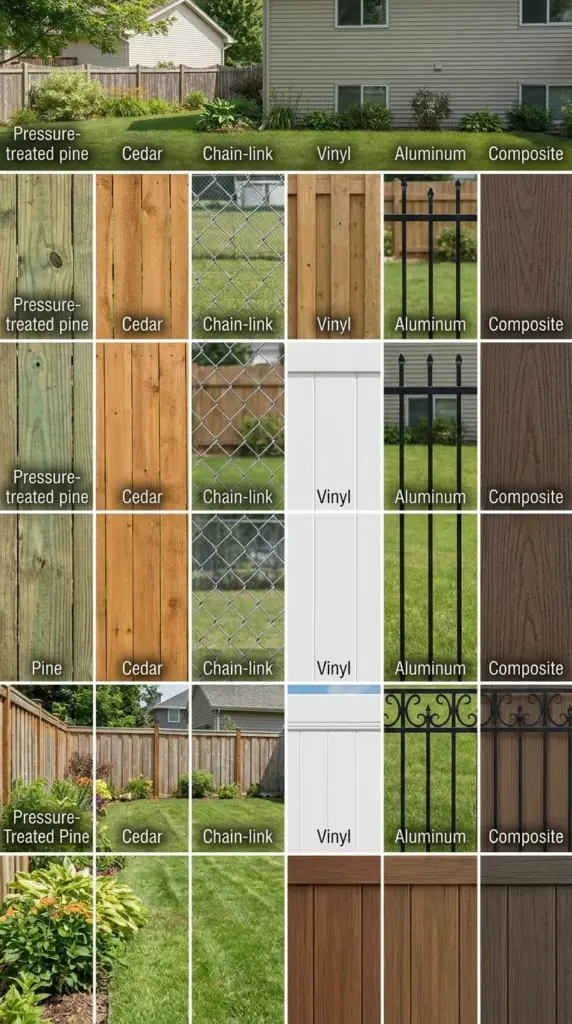
Wood, chain link, vinyl, aluminum, or composite?
For many homeowners, pressure-treated pine fence options are the entry point for a budget-friendly privacy build.
A cedar fence usually costs more upfront, but it tends to look better longer and can resist rot better in the right conditions.
Chain-link fence cost is often lower for big areas and pet containment, though it gives less privacy unless you add slats.
Vinyl fence cost is usually higher upfront, but it can save time on repainting and routine upkeep.
Aluminum fence works well for decorative boundaries and some pool areas, but it won’t give privacy.
Composite fence cost is often the highest, so I rarely call it “budget,” even though it can be low-maintenance.
Think in five-year terms
A lot of people buy the cheapest material available, then get hit with sealing, repainting, warping, or panel replacement.
That’s why I like to ask, “What will this cost me to own, not just install?”
If you hate maintenance, a super low-cost wood fence may not feel cheap once it needs constant attention.
If you live in a wet climate, rot resistance matters.
If your yard gets intense sun, fading and expansion matter too.
Match the material to the job
For full privacy, wood or vinyl usually makes the most sense.
For dogs, make sure gap size and bottom clearance actually match your pet, because some little escape artists are basically furry engineers.
For curb appeal, aluminum or a lower decorative wood fence can be lovely.
For pure function on a tight budget, chain link still earns its spot, even if it’s not exactly glamorous.
Material choice matters, but code mistakes can still wreck the whole plan. Hit the next button below, because the most common fence violations are a lot more ordinary than people expect.



GIPHY App Key not set. Please check settings