

 The Home Growns
Check permits, zoning, and local rules before you buy anything
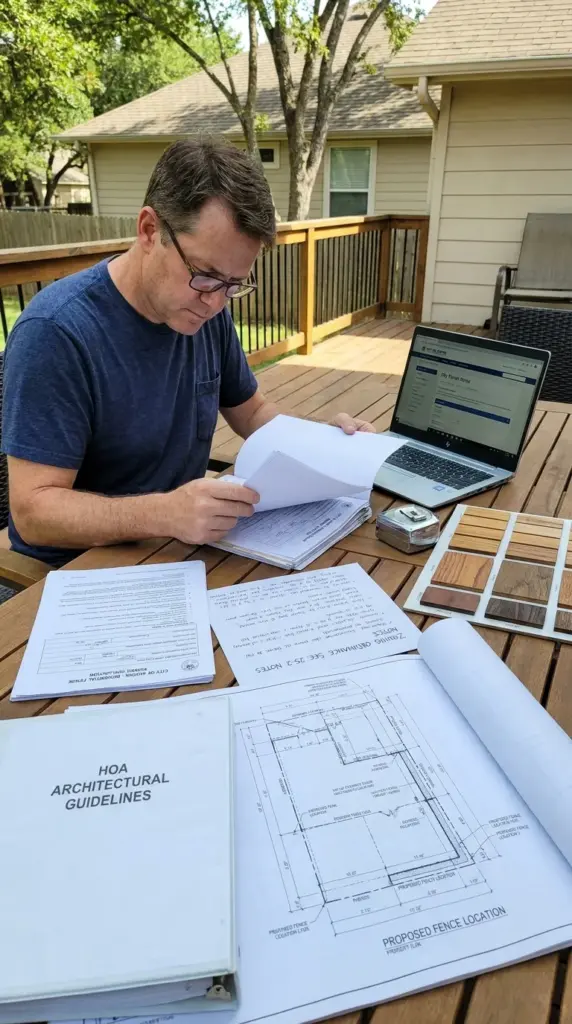
Local code is not optional
I know, I know.
Reading municipal code is nobody’s dream weekend activity.
But fence zoning rules decide whether your fence can legally exist where you want it, how tall it can be, what materials are allowed, and whether you need a fence site plan or permit first.
In many places, backyard fence height is often capped around 6 feet, while front yards may be limited closer to 3 or 4 feet.
That pattern is common, but your city can be stricter.
Why copying the neighbor can backfire
I hear this one all the time: “My neighbor has the same thing, so I assumed it was fine.”
Please don’t do that.
Their fence may be older, grandfathered in, unpermitted, or technically noncompliant but simply never reported.
That is not the legal protection people think it is.
If you install a new fence today, you’re usually held to current rules, not what somebody else got away with ten years ago.
Special cases that catch people off guard
Some lots have extra rules for corner lot visibility, historic districts, shared alleys, or properties with pools.
If there’s a pool involved, pool fence code can be a totally separate layer of requirements for height, latch location, and climbability.
And if you live in a neighborhood with an HOA, the city approval may still not be enough.
Yep, you may need both.
The next step is even less glamorous, but way more important: confirming where your fence can actually go. Hit the next button below, because property lines, easements, and buried utilities are where DIY confidence gets humbled real fast.


GIPHY App Key not set. Please check settings