

 The Home Growns
Decide when DIY still makes sense and when to call a pro
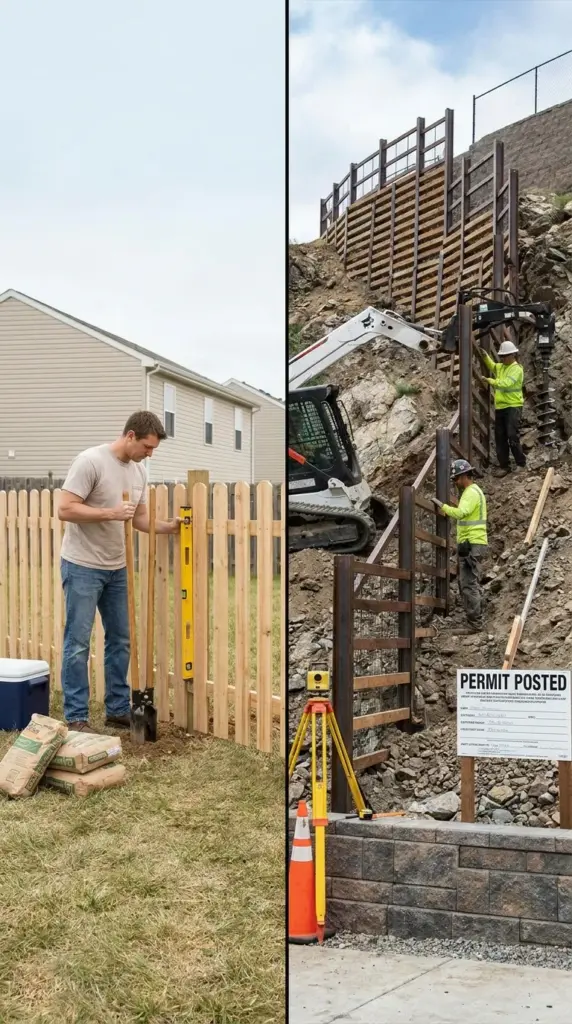
DIY makes sense when the project is simple
If your lot is straightforward, the property lines are clear, the rules are simple, and you’re building a standard fence with manageable soil conditions, DIY can absolutely save money.
That is especially true for short runs, simple repairs, or replacing a section with the same layout.
If you’re patient, decent with measuring, and willing to learn, you can do a lot.
Call a pro when the risk is bigger than the labor savings
If you have uncertain property boundaries, steep grades, utility conflicts, complex fence permit requirements, or tricky HOA approval, bringing in help may save money in the long run.
The same goes for custom gates, major retaining changes, or a fence near streets where setback requirements and visibility rules matter.
I’m a huge DIY cheerleader, but I’m not into fake bravery.
Sometimes the most budget-friendly move is paying for expertise before mistakes get expensive.
My pre-dig checklist
Before you dig, confirm your purpose, measure the full layout, check local code, verify the property line, review HOA rules, call 811, and budget every gate, post, and hardware piece.
Then ask yourself one last honest question: If this goes sideways, do I have the skills, tools, and time to fix it correctly?
If the answer is no, that’s okay.
That’s not failure.
That’s wisdom.
If this helped you feel more confident about building a code-compliant fence without blowing your budget, I’d love to hear about it. Drop a comment below, share this with a friend who’s planning a fence, and pin it for later before you start digging.


GIPHY App Key not set. Please check settings