

 The Home Growns
Handle slopes, drainage, and ground conditions like a pro
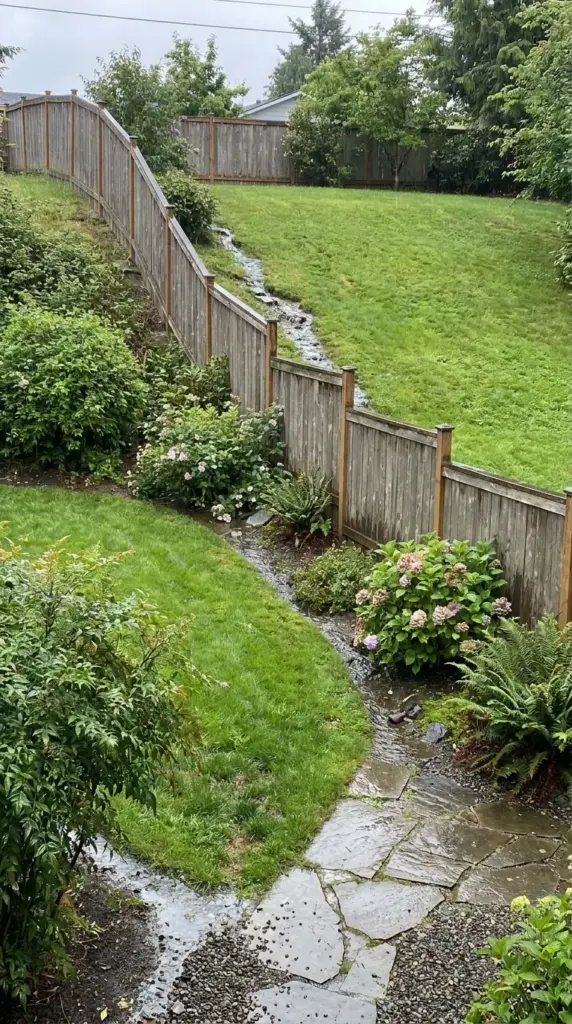
Flat-yard plans do not work everywhere
A fence on a sloped yard needs a different approach than one on flat suburban turf.
If you ignore the grade, you’ll end up with awkward gaps, crooked sight lines, or panels that don’t fit the terrain.
That’s usually when DIY panic sets in.
And fair enough, because slopes can get annoying fast.
Racked vs stepped fence layouts
A racked fence follows the slope more closely, creating a smoother top line and smaller gaps under the fence.
A stepped fence creates level sections that drop down in stages, which can be easier with some panel systems but looks more segmented.
Neither is automatically better.
It depends on your material, slope, budget, and the look you want.
Drainage is not a side issue
Drainage around fence posts affects rot, movement, and long-term stability.
If water pools near the fence line, fix that first or at least plan around it with smarter placement and footing choices.
A cheap fence in a wet problem area is often not cheap for long.
And if you’ve got a gate in that same area, oh boy, that’s where things get extra fun.
Which brings us to the most dramatic part of most fence builds. Hit the next button below, because gates are where so many “budget” projects quietly fall apart.


GIPHY App Key not set. Please check settings