

 The Home Growns
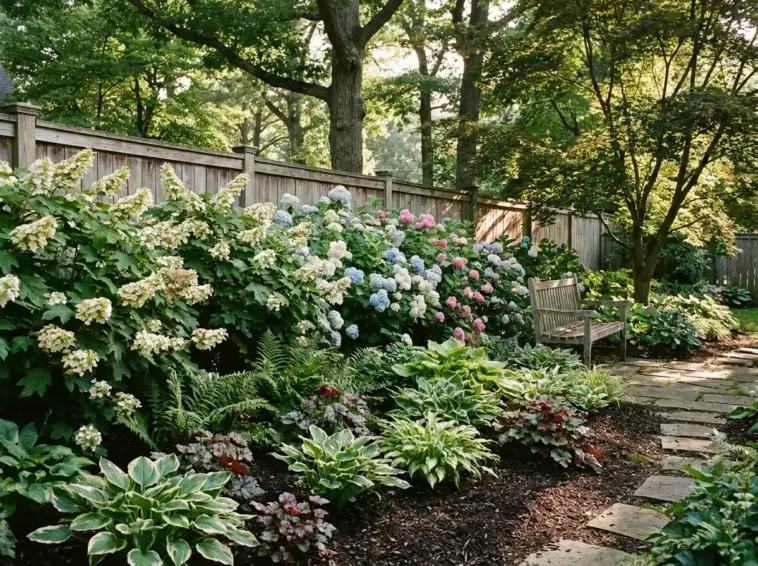
I love hydrangeas, but I’m gonna be honest, deep shade can make them act a little dramatic.
I’ve planted gorgeous shrubs in what I thought was “gentle shade,” only to get lots of leaves, floppy stems, and about three sad flowers.
The good news is that you really can grow a full hydrangea hedge in deep shade if you match the plant to the site and stop treating all hydrangeas like they want the same thing.
Why Deep Shade Makes Hydrangea Hedges Tricky
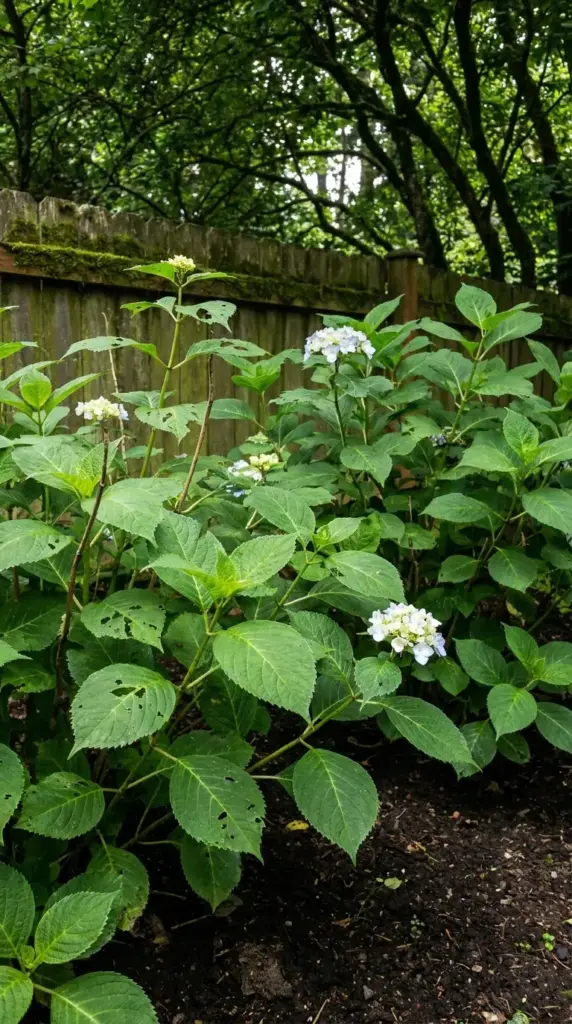
What deep shade really means
Deep shade is not the same as part shade or morning sun with afternoon protection. It usually means fewer than 3 hours of direct sun, or heavy filtered light all day under dense trees, fences, or north-facing walls.
That matters because hydrangeas use light to build stronger stems and produce more flower buds. In very dark spots, they often survive just fine, but they don’t always perform the way the tag photo promised.
What you can realistically expect
In a true low-light bed, I aim for three wins: healthy foliage, good structure, and seasonal blooms. If I get massive flower coverage in very deep shade, that feels like a bonus, not the baseline.
A shade hedge can still look lush, expensive, and polished even when bloom count is lower. Sometimes the leaf texture, shape, and layering do more visual work than the flowers anyway.
Shade-tolerant does not mean bloom-heavy
This is the trap a lot of us fall into. A plant labeled shade tolerant usually means it won’t die there, not that it will bloom like crazy there.
I learned that the hard way with a bigleaf hydrangea row under mature trees. They stayed alive, sure, but they bloomed like they were on strike.
And before you choose a single variety, hit the next button below, because the real game-changer is figuring out how much light your hedge actually gets.

GIPHY App Key not set. Please check settings