

 The Home Growns
5. Soil, Compost, and Fertilizer Tips for Low-Light Gardens
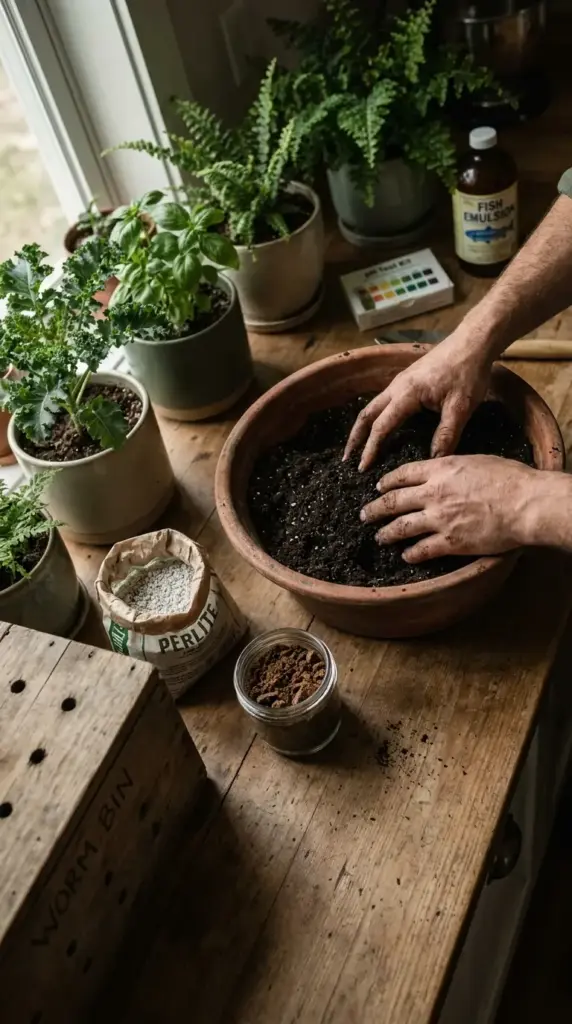
I killed an entire batch of perfectly good kale once — not from lack of sunlight, but from terrible soil.
That was a humbling Tuesday. 😔
Why Soil Quality Matters Even More in Shade
Here’s the thing about shaded gardens — plants are already working harder to photosynthesize with limited light.
Poor soil quality just piles on the stress, making it nearly impossible for roots to absorb the nutrients they desperately need.
Rich, well-draining soil is genuinely non-negotiable in low-light container gardens.
Best Potting Mixes for Low-Light Container Farms
Never — and I mean never — use regular garden soil in containers.
It compacts quickly, suffocates roots, and drains terribly. A high-quality potting mix with added perlite is your best starting point.
I personally love Fox Farm Ocean Forest mixed with about 20% perlite for drainage. Works beautifully for shade-tolerant crops.
DIY Composting in a Small Urban Space
Composting in a tiny apartment or urban home sounds intimidating. It really isn’t.
A small countertop worm bin — called vermicomposting — is perfect for city dwellers and produces incredibly rich, nutrient-dense castings your plants will absolutely love.
Toss in vegetable scraps, coffee grounds, and eggshells. The worms handle everything else. Honestly, it’s a little magical. 🪱
Organic Fertilizers That Actually Work in Low Light
Shade-grown plants need less nitrogen than full-sun crops — too much actually causes leggy, weak growth.
Worm castings, fish emulsion, and kelp meal are my holy trinity for low-light gardens.
They feed slowly and gently, which is exactly what shade-tolerant plants prefer.
pH Levels and Drainage — Keep It Simple
Most vegetables and herbs thrive in a pH range of 6.0 to 7.0 — slightly acidic to neutral.
Grab an inexpensive pH testing kit from Amazon for around $10 and check your soil seasonally.
Poor drainage in shaded containers causes root rot faster than almost anything else — so always ensure your pots have adequate drainage holes.
Seasonal Feeding Schedules
Spring and summer — feed every two to three weeks with a balanced organic fertilizer.
Fall — reduce feeding significantly as plant growth naturally slows.
Winter — stop fertilizing almost entirely and let your plants rest.
Next up, we’re unlocking one of the most exciting tricks in low-light gardening — how to literally hack more light into your shady space using reflective surfaces and grow lights. 💡✨

GIPHY App Key not set. Please check settings