

 The Home Growns
2. The Best Vegetables and Herbs to Grow in a Low-Light Mini Farm
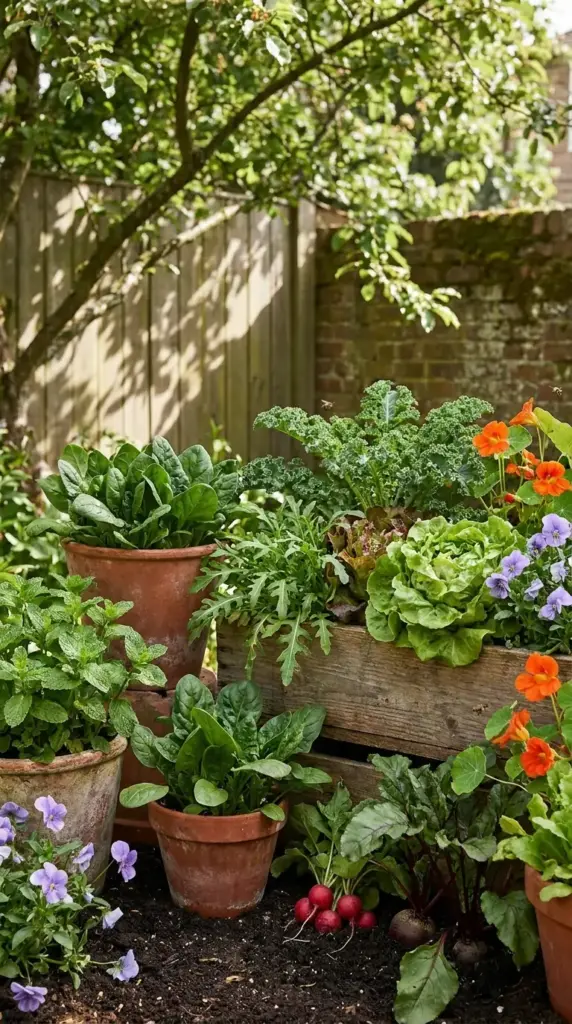
Here’s something nobody told me when I started: not every plant needs a sun-soaked garden bed to thrive.
Some of my best harvests ever came from the shadiest corner of my yard.
Leafy Greens That Love the Shade
Spinach, kale, arugula, and lettuce are your absolute best friends in a low-light mini farm.
These crops actually prefer cooler, shadier conditions — too much direct sun makes them bolt (go to seed) way too fast.
Lettuce, for example, grows beautifully with just 3 to 4 hours of indirect sunlight daily. That’s it.
Herbs That Don’t Need Much Sun
This one genuinely surprised me.
Mint, parsley, chives, and cilantro are remarkably shade-tolerant — and honestly, mint will grow just about anywhere if you let it.
Pro tip: keep mint in its own container. I learned that lesson the hard way when it took over my entire planter box. 😅
Root Vegetables Worth Trying
Radishes, beets, and carrots can tolerate partial shade, though they’ll grow a little slower than in full sun.
Radishes are my personal favorite for shady spots — they mature in as little as 25 days and require almost zero effort.
Beets are surprisingly forgiving too.
Edible Flowers for Low-Light Spaces
Nasturtiums, violas, and impatiens are gorgeous and edible — perfect for the gardener who wants beauty and function.
They add incredible color to a shaded mini farm while attracting beneficial pollinators.
What NOT to Plant in Low Light
Please, please don’t try growing tomatoes, peppers, cucumbers, or squash in a shady spot.
These are heavy sun feeders requiring 8+ hours of direct sunlight daily. Without it, you’ll get weak, leggy plants and almost zero fruit. It’s just heartbreaking.
Seasonal Tips for Northern Cities
If you’re gardening in Minneapolis, Detroit, or Chicago, your growing window is shorter — so timing is everything.
Start shade-tolerant crops indoors in late February or early March, then transplant outside after your last frost date.
Cool-season crops like spinach and arugula can even handle a light frost, giving you a head start in spring and a longer fall harvest.
Next up — you’re going to love this — we’re diving into the best containers and planters that’ll make your mini farm look like it belongs in a design magazine. 🪴✨

GIPHY App Key not set. Please check settings