

 The Home Growns
14. The Best Low-Maintenance Edible Plants for Busy Urban Women
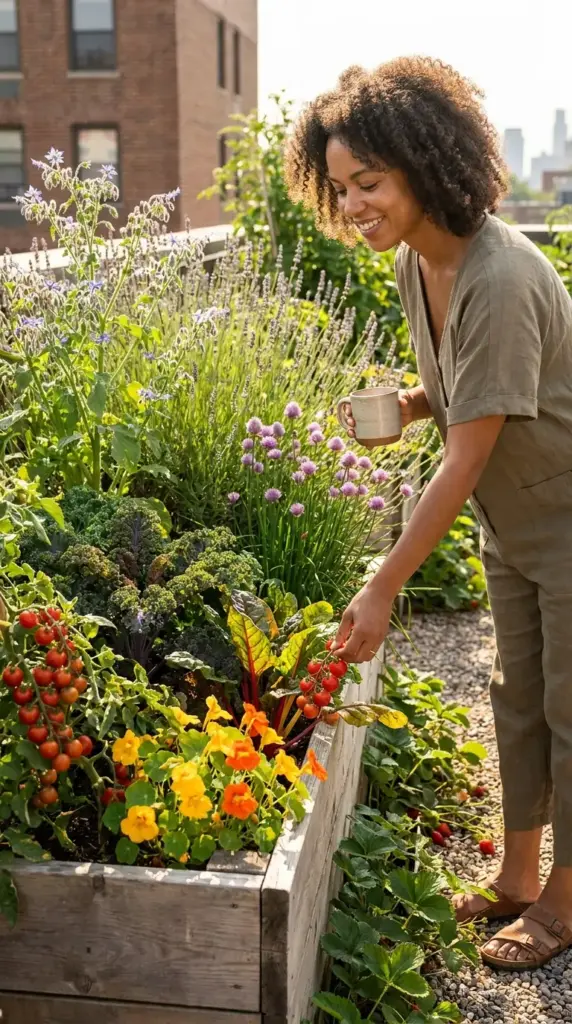
I’m just going to say what every busy gardener is actually thinking.
We want homegrown food. We do not always have three hours on a Saturday to tend a high-maintenance garden.
Real life is busy. These plants get that. 😄
Top 10 “Plant It and Forget It” Vegetables for Beginners
These are my absolute ride-or-die recommendations for low-maintenance vegetable gardening — tested through years of busy schedules and occasional neglect:
- Cherry tomatoes — incredibly forgiving, outrageously productive
- Zucchini — practically grows itself, sometimes too enthusiastically
- Kale — harvest outer leaves continuously for months without replanting
- Swiss chard — gorgeous, resilient, and almost impossible to kill
- Radishes — ready to harvest in just 25 days from seed
- Green onions — regrow continuously from kitchen scraps in a glass of water
- Bush beans — no staking, no fussing, just consistent harvests
- Lettuce — cut-and-come-again varieties produce for an entire season
- Garlic — plant in fall, completely ignore all winter, harvest in summer
- Sweet potatoes — plant the slips, walk away, dig up dinner in fall
Perennial Edibles That Come Back Every Year
This is honestly where smart garden planning pays the biggest long-term dividends.
Plant these once and they reward you for years with minimal intervention:
- Asparagus — takes patience the first two years but produces for 20 years afterward
- Rhubarb — virtually indestructible and genuinely beautiful as a garden plant
- Chives — multiply enthusiastically every single season
- Sorrel — lemony, delicious, and completely unfazed by neglect
- Horseradish — plant it once and honestly, good luck stopping it
- Strawberries — spread naturally via runners, creating gorgeous ground cover
Perennial edibles are the ultimate low-maintenance garden care strategy — less replanting, less work, more harvest. 🌿
Best Plants for Each Urban Climate Zone
Climate matching is everything for low-maintenance success — so let’s get specific:
New York & Chicago — cold-hardy varieties are your friends
- Kale, garlic, rhubarb, and Honeycrisp apple trees handle brutal winters beautifully
Los Angeles — lean into your extraordinary growing season
- Citrus trees, artichokes, peppers, and year-round lettuce thrive effortlessly
Seattle — embrace the cool, damp climate
- Brassicas, berries, herbs, and espaliered pear trees absolutely love Pacific Northwest conditions
Dallas — heat tolerance is non-negotiable
- Sweet potatoes, okra, fig trees, and heat-tolerant herbs like rosemary and thyme are practically made for Texas summers
Edible Plants That Thrive in Partial Shade
Tight urban lots in cities like Philadelphia and Washington DC often mean limited direct sunlight — and that’s completely okay.
These edibles genuinely prefer partial shade conditions:
- Lettuce and spinach — actually last longer in summer shade without bolting
- Mint — thrives in shadier spots where other herbs struggle
- Kale and chard — handle shade remarkably well while staying productive
- Rhubarb — one of the most shade-tolerant edible perennials available
- Nasturtiums — bloom prolifically even in dappled light conditions
Don’t let a shady yard convince you that gardening isn’t possible. It absolutely is. 🌸
Pairing Beauty With Function Through Edible Flowers
This is honestly one of my favorite topics in all of edible gardening.
Edible flowers are the ultimate bridge between purely decorative gardening and functional food production — and they’re genuinely some of the easiest plants you can grow.
My absolute favorites for HOA-friendly edible landscaping:
- Nasturtiums — peppery, beautiful, and bloom prolifically with zero attention
- Calendula — cheerful orange blooms with genuine medicinal and culinary value
- Lavender — fragrant, elegant, and useful in everything from lemonade to baked goods
- Borage — stunning star-shaped blue flowers that self-seed enthusiastically every year
- Viola and pansies — cold-hardy, charming, and completely edible in salads
Scatter edible flowers generously throughout your hidden mini farm and the entire garden reads as a beautifully curated ornamental landscape.
Nobody sees a food garden. Everyone sees something gorgeous. 🌿
We’re almost at the finish line — next up is our final section on how to document, track, and grow your mini farm over time. It’s packed with practical tools, seasonal planning tips, and everything you need to keep your hidden garden thriving year after year. Don’t skip the conclusion — it ties everything together beautifully!

GIPHY App Key not set. Please check settings