

 The Home Growns
10. How to Build a Greenhouse or Cold Frame That Looks Like a Garden Feature
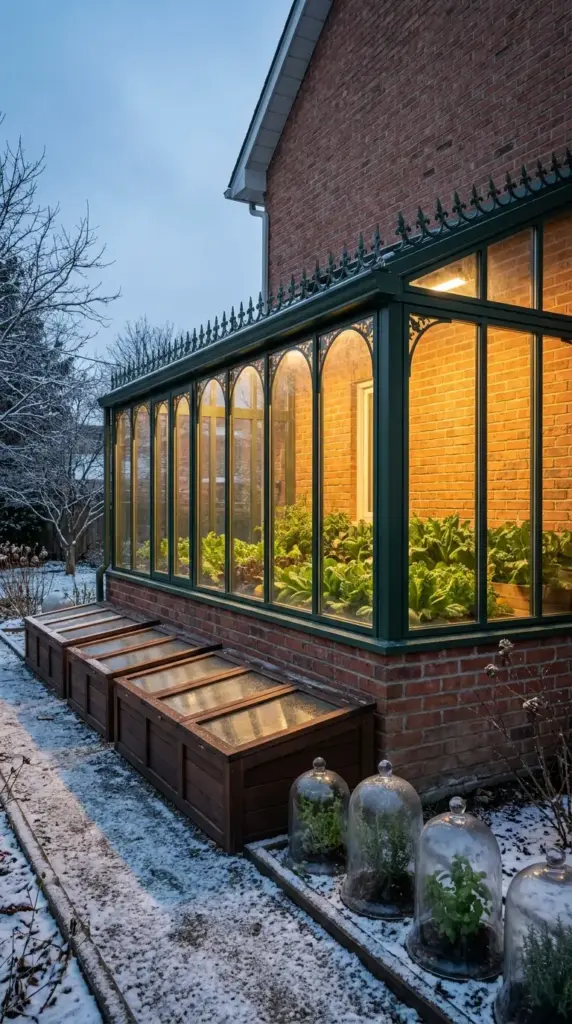
The first greenhouse I ever built was a sad little plastic tunnel that looked like it belonged on a construction site.
My HOA noticed it within 48 hours.
That experience taught me everything I needed to know about the difference between a functional greenhouse and one that actually belongs in a beautiful garden. 😄
Mini Greenhouse Designs That Mimic Garden Architecture
The secret is designing your greenhouse to look like an intentional architectural garden feature rather than a utilitarian growing structure.
Think Victorian-style glass and aluminum greenhouses with decorative ridge caps and finials — they look like something from a English estate garden.
Lean-to greenhouse designs attached directly to your home’s exterior wall read as a natural architectural extension rather than a separate structure.
Brands like Palram and Juliana make genuinely beautiful greenhouse structures that could honestly pass as upscale pergola designs. Worth every penny. 🌿
Cold Frames Styled as Decorative Garden Borders
A cold frame is essentially a bottomless box with a transparent lid — and it’s one of the most underrated season-extension tools in urban homesteading.
The trick is building them to look intentional.
Use cedar or composite lumber to match your existing raised beds, add decorative corner posts, and finish with tempered glass lids rather than cheap plastic sheeting.
Arranged symmetrically along a garden border, they look like deliberate architectural edging rather than growing structures.
Using Glass Cloches and Row Covers Elegantly
This is honestly one of my favorite low-cost, high-impact strategies for cold-climate gardening.
Glass bell cloches placed over individual plants look like genuine garden décor — the kind you’d find in an upscale garden boutique.
Arranged in a row over a kitchen herb garden, they look deliberately styled rather than functionally protective.
For larger areas, choose white fabric row covers rather than clear plastic — they have a soft, intentional aesthetic that reads as purposeful garden design rather than makeshift frost protection.
HOA-Approved Greenhouse Materials and Size Considerations
Before building anything, pull out those bylaws again.
Most HOAs regulate accessory structures by size — typically anything under 120 square feet doesn’t require a permit in most municipalities.
Material guidelines matter too. Stick with:
- Tempered or polycarbonate glass over cheap plastic sheeting
- Powder-coated aluminum frames in colors that complement your home exterior
- Natural wood elements to soften the industrial look of metal framing
When in doubt, submit a written proposal with renderings to your HOA board before breaking ground. It demonstrates respect and almost always smooths the approval process.
Year-Round Growing Strategies for Cold-Climate Cities
For my fellow gardeners in Detroit, Chicago, and Minneapolis — I see you, and this section is specifically for us. ❄️
A four-season greenhouse with proper insulation can maintain growing temperatures even when it’s well below freezing outside.
Focus your cold-weather growing on frost-tolerant crops:
- Spinach and kale — genuinely thrive in near-freezing temperatures
- Carrots and beets — cold actually improves their flavor
- Microgreens — incredibly productive in small indoor spaces during brutal winters
- Garlic — plant in fall, harvest in early summer, almost zero maintenance
Add a small electric space heater with a thermostat and a basic grow light setup and you’ve essentially created a year-round food production system that fits inside a structure most neighbors assume is a fancy garden shed. 🌿
Next up, we’re tackling something every gardener eventually needs to master — composting discreetly in an HOA neighborhood. I’ve got some genuinely clever solutions that are cleaner, prettier, and more effective than anything you’ve tried before. Don’t miss it!

GIPHY App Key not set. Please check settings