
 The Home Growns
13. How to Engage Your HOA and Neighbors to Get Buy-In
The biggest mistake I see HOA homesteaders make has nothing to do with plants, design, or bylaws.
It’s going silent — just hoping nobody notices — instead of proactively building relationships.
Trust me on this one. Transparency done strategically is your most powerful tool. 🌿
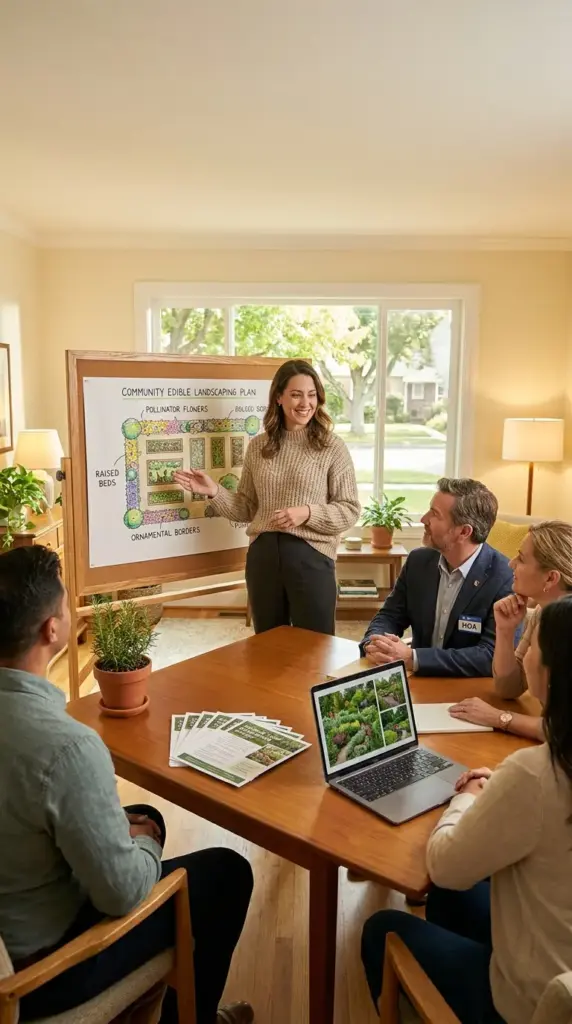
Tips for Presenting Your Mini Farm Idea to Your HOA Board
Walk into that HOA meeting prepared like you’re giving a professional presentation — because honestly, you kind of are.
Bring printed visuals. Show beautiful examples of edible landscaping from reputable sources like Better Homes & Gardens or Sunset Magazine.
Frame everything around property values, sustainability, and neighborhood aesthetics — the three things HOA boards genuinely care about most.
A few specific tips that work every single time:
- Request agenda time in advance rather than showing up unannounced
- Bring a one-page visual summary of your proposed garden design
- Reference comparable HOA communities that have successfully approved similar gardens
- Propose a trial period — it lowers the perceived risk dramatically
- Always follow up in writing after verbal approvals. Always.
Framing Your Garden as a Community Beautification Project
This reframe is genuinely game changing.
Nobody wants to approve a “vegetable garden.” But a neighborhood beautification initiative that happens to include edible plants? That’s a completely different conversation.
Emphasize pollinator gardens, sustainability practices, and curb appeal improvements in every single conversation.
Offer to share your design plans openly — it signals confidence and nothing to hide. 😄
Connecting With Like-Minded Neighbors
Here’s something I’ve seen work beautifully in communities across the country — strength in numbers is real.
Find your fellow urban homesteading enthusiasts in the neighborhood before approaching your HOA.
Even two or three supportive neighbors attending that HOA meeting with you changes the entire dynamic of the conversation.
A community garden plot proposal is dramatically harder to reject than one individual’s personal garden request — it becomes a neighborhood amenity rather than a private project.
Using Social Media and Local Groups to Find Allies
Your HOA-friendly homesteading community is closer than you think.
Search Facebook Groups for your specific city or neighborhood — communities like “Chicago Urban Homesteaders” or “Dallas Backyard Gardeners” are full of people navigating these exact same challenges.
Nextdoor is particularly powerful for this — it’s neighborhood-specific and HOA conversations happen there organically all the time.
Instagram hashtags like #urbanfarming, #foodscaping, and #HOAgarden connect you with a genuinely supportive community of creative problem-solvers. 🌸
How to Document Your Garden’s Compliance
This step is non-negotiable — and most people skip it completely until something goes wrong.
Build a simple garden compliance folder — physical or digital — that includes:
- Written HOA approval correspondence for every element of your garden
- Dated photographs documenting your garden’s appearance and condition
- Copies of relevant bylaw sections with your interpretations noted
- Records of any neighbor complaints and how they were resolved
- Municipal ordinance documentation supporting your gardening rights
If you ever receive a violation notice, this folder is your defense.
I’ve seen homesteaders avoid fines and forced removal simply because they had meticulous documentation proving consistent compliance.
Your garden represents real time, money, and love — protect it accordingly. 🌿
Next up, we’re wrapping things up with one of the most practical sections in this entire guide — the best low-maintenance edible plants for busy women who want maximum harvest with minimum fuss. This one is packed with specific, actionable recommendations you’re going to absolutely love!

GIPHY App Key not set. Please check settings