

 The Home Growns
How to Set the Bricks Flush, Level, and Mower-Friendly
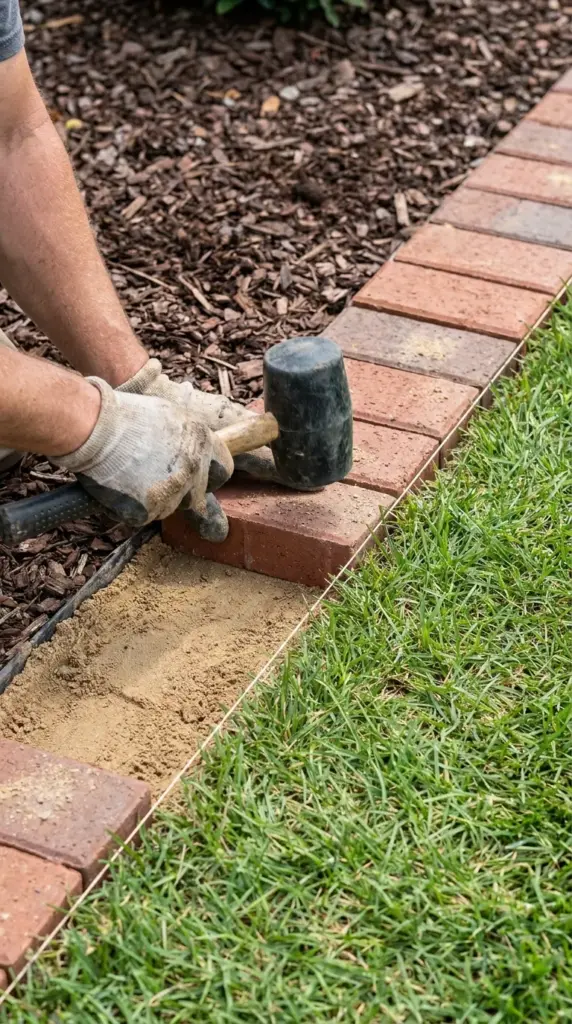
Place and tap each brick carefully
Set one brick at a time and use a rubber mallet to tap it into position. Don’t pound like you’re driving fence posts.
Small taps are enough. You’re aiming for even height, not brute-force submission.
Keep the top surface nearly flush
For a mow-over brick border, the top of the brick should usually sit even with the lawn or just a hair above it.
If it’s too high, mower wheels bump it and the edge chips. If it’s too low, soil and turf creep over the top.
Watch the joints and line
Consistent spacing matters. So does stepping back every so often to check if the run still looks smooth.
A border can be technically level and still look wonky if the joints wander. I’ve had that happen, and wow, it’s annoying once you notice it.
Backfill as you go
As sections are set, backfill behind them lightly so they don’t shift while you work.
This is especially helpful on curves or long runs. Up next, I’ll show you how to handle curves, corners, and tight spots without ending up with awkward gaps and ugly cuts, so hit the next button below.


GIPHY App Key not set. Please check settings