

 The Home Growns
Why Most Gardeners Are Edging Their Lawns Wrong
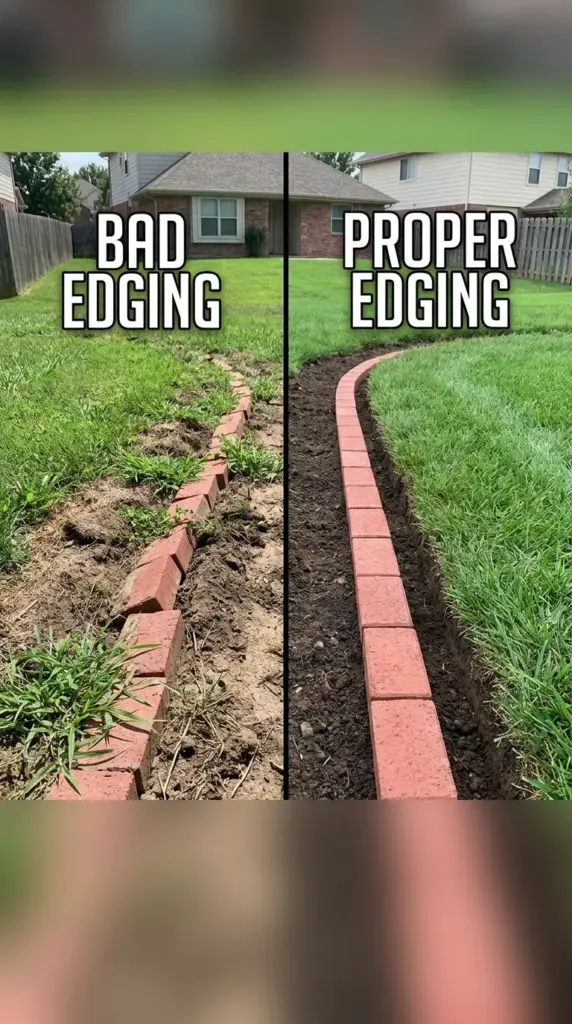
They dig way too shallow
This is the big one. A lot of people dig just enough so the brick looks tucked in, then call it done.
That shallow setup almost always settles unevenly. In wet weather, it sinks; in freeze-thaw climates, it lifts; and in high-traffic spots, it twists out of line.
They set bricks directly on topsoil
I know why people do it. It’s quicker, cheaper, and honestly a lot of tutorials make it look normal.
But topsoil is not a foundation. It has roots, air pockets, organic matter, and moisture swings that make brick edging wobble and drift.
They skip compaction
This is the not-so-glamorous part nobody wants to hear. If the base isn’t compacted with a hand tamper or plate compactor, the whole border keeps moving.
I’ve skipped this before on a hot Saturday because I was “almost done.” By the next season, I was out there with a rubber mallet, muttering at myself.
They expect brick to stop grass by itself
Brick helps define the border, sure. But if the lawn edge isn’t cut cleanly and mulch bridges across the top, grass creep still happens.
That’s why people end up thinking brick edging “doesn’t work,” when really the install was the problem. Next, I’ll show you why the popular 3-inch edging rule gets mixed up with brick edging all the time, so hit the next button below.

GIPHY App Key not set. Please check settings