

 The Home Growns
How to Plan the Border Before You Dig
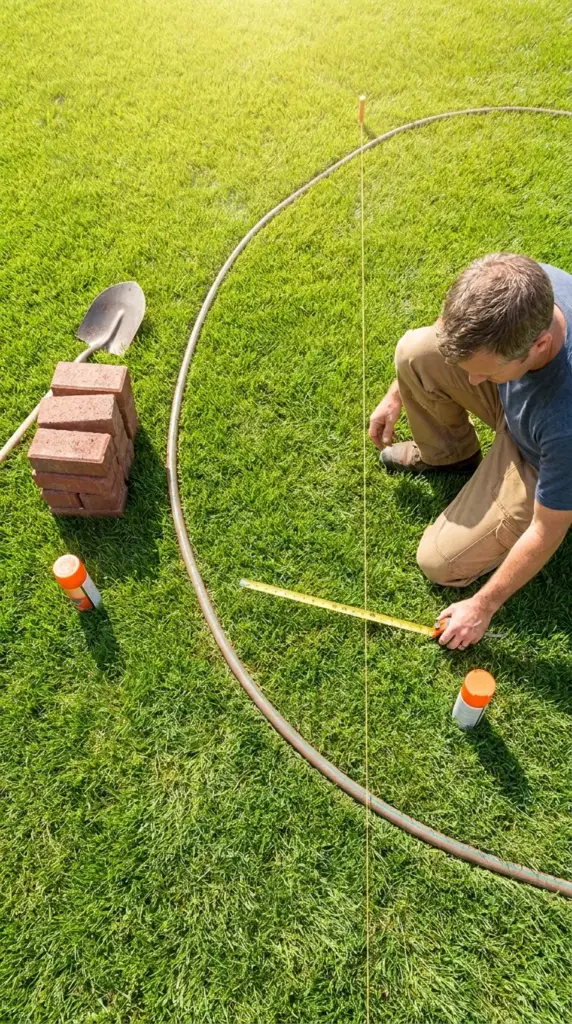
Use a hose, rope, or mason line first
Please do not freehand this with a spade unless you enjoy regret. A rope layout or garden hose lets you test the shape before the dirt starts flying.
For straight runs, a mason line is your best friend. For curves, a hose is easier to tweak until the shape feels natural.
Gentle curves beat fussy wiggles
I know the temptation. Tiny decorative swoops feel creative in the moment.
But in real life, fussy curves are harder to dig, harder to edge, and harder to mow. Curved brick edging looks best when the curve is broad and calm.
Measure, then add extra
Always measure the full perimeter and buy extra material. I like to add at least 10 percent for cuts, breakage, and “well that was annoying” moments.
If you’re building around corners, trees, or tight bends, add a little more. Skinny filler pieces rarely look good.
Check the view from different angles
This sounds picky, but it works. Step back and look from the street, the porch, and your main window.
Sometimes a line looks great up close and weird from ten feet away. In the next section, I’ll show you how deep to dig and why subsoil matters more than most gardeners realize, so hit the next button below.

GIPHY App Key not set. Please check settings