

 The Home Growns
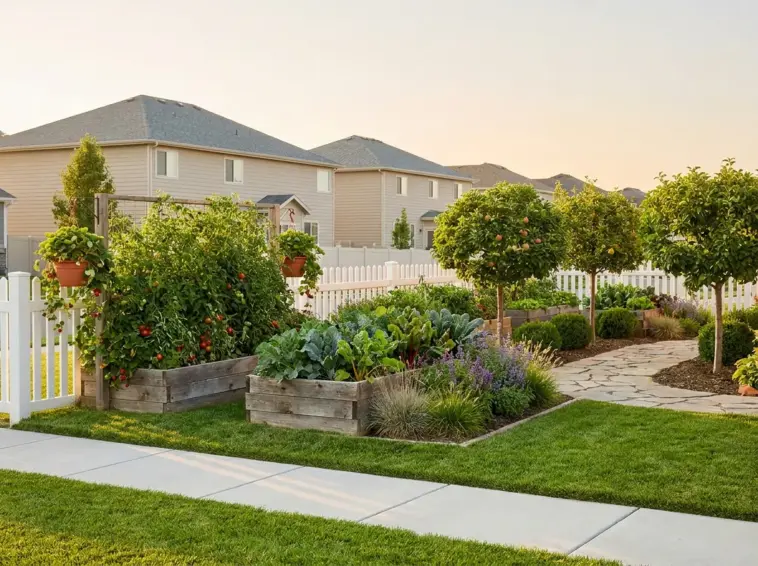
Did you know that over 74 million Americans live in HOA-governed communities — and a growing number of them are quietly growing their own food anyway?
If you’ve ever stared at your perfectly manicured, HOA-approved lawn and thought, “I wish I could grow something real here,” — you’re not alone!
I’ve been there. The frustration of wanting fresh tomatoes, herbs, and greens while living under a rulebook thicker than a seed catalog is real.
But here’s the secret the most resourceful urban homesteaders know: you don’t have to choose between your community and your garden. You just have to get creative.
Whether you’re in a townhouse in Chicago, a suburban home in Dallas, or a condo community in Seattle, this guide is for you — the savvy, design-forward woman who wants beauty and function in her outdoor space.
These 15 genius strategies will help you grow food, stay compliant, and honestly?
Make your yard look even better than your neighbors.
1. Why HOA Rules Don’t Have to Stop Your Homesteading Dreams
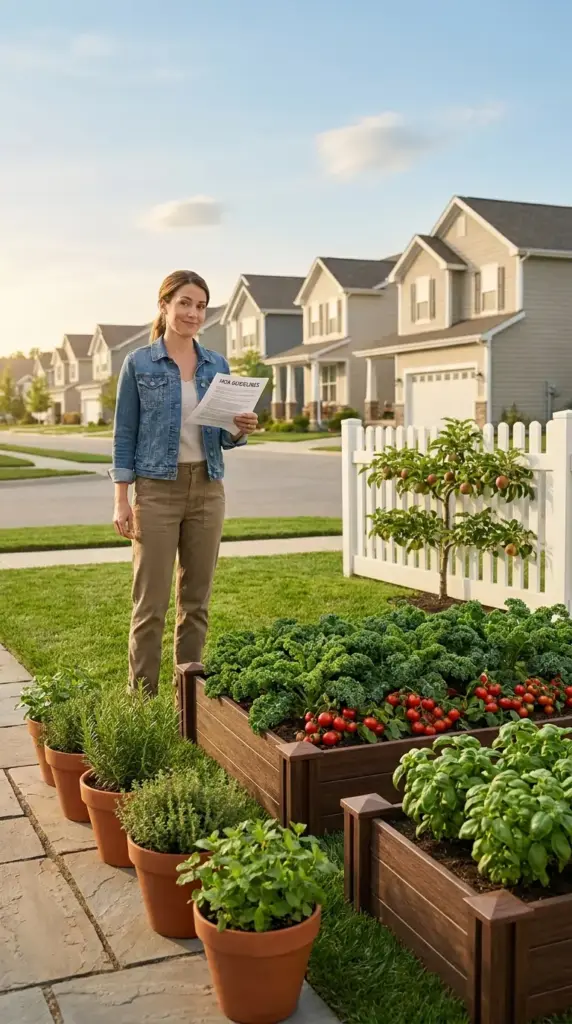
I’ll be honest — the first time I read through my HOA bylaws, I nearly gave up before I even started.
It felt like every other page was a new reason I couldn’t do something.
But then I slowed down and actually read the thing carefully. And that changed everything.
The Most Common HOA Restrictions That Affect Food Gardens
Most HOAs restrict things like visible vegetable gardens in front yards, unapproved structures (hello, raised beds), and anything deemed an “eyesore.”
Livestock rules are common too — but they usually target chickens and goats, not herbs on your porch.
How to Read Your Bylaws and Find the Gray Areas
Here’s the trick I learned the hard way: what isn’t explicitly forbidden is often allowed.
Go through your CC&Rs and highlight every mention of “gardens,” “landscaping,” and “structures.” You’ll likely find the rules are way more vague than you expected.
Vague language is your friend. A rule against “unkempt gardens” doesn’t mean a tidy raised bed is prohibited.
Prohibited vs. Not Mentioned — There’s a Big Difference
This distinction is huge and most people miss it completely.
If your bylaws don’t specifically ban edible plants, container gardens, or vertical planters — they’re technically fair game.
I once grew an entire patio vegetable garden in containers because the rules only mentioned “in-ground planting restrictions.” Loophole? Maybe. Smart? Absolutely.
Real HOA-Friendly Mini Farms That Actually Passed Inspection
A neighbor of mine in a pretty strict community got her raised bed herb garden approved simply by framing it as “decorative landscaping.”
Another woman I know in a Dallas suburb grows dwarf fruit trees along her fence line — her HOA board called it “a lovely addition to the streetscape.”
Presentation matters more than you’d think.
Why HOAs Are Actually Loosening Up
Sustainability trends are shifting the conversation. More HOA boards are recognizing the value of edible landscaping, pollinator gardens, and eco-friendly yard practices.
Some states — like California and Florida — have even passed laws limiting HOAs from banning food gardens outright.
The tide is turning, and that’s genuinely exciting.
Now that you know how to work with your HOA instead of against it, wait until you see what’s next — we’re diving into how to design a mini farm that looks so good, your neighbors will actually be jealous. 🌿

GIPHY App Key not set. Please check settings