

 The Home Growns
The Perfect Soil and Potting Setup to Prevent Root Rot
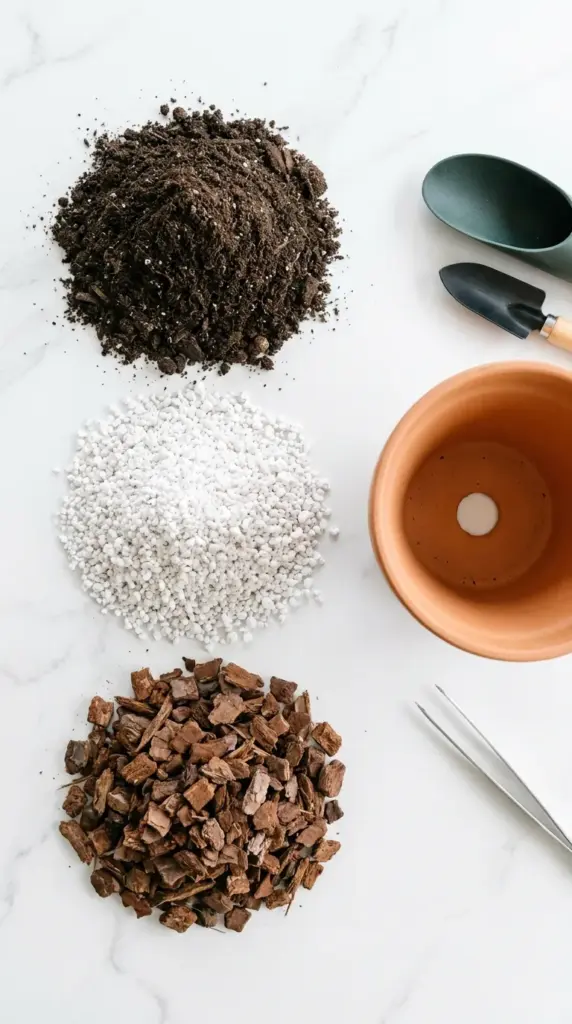
I’ll admit, back in my early indoor gardening days, I totally thought any old bag of dirt from the local big-box store would do the trick. I stuffed a beautiful new ZZ into a heavy ceramic pot with zero drainage holes, and it basically turned into a suffocating underground swamp within a month.
It was a tough lesson, but it taught me that the secret to a thriving plant starts with what’s happening inside the container.
Crafting the Ultimate Chunky Mix
To keep your plant truly happy, you need a well draining soil blend that mimics those dry East African plains. Regular, dense houseplant soil holds onto way too much moisture for a succulent-adjacent root system, leading to disaster.
I love mixing two parts standard potting mix with one part perlite mix and a generous handful of orchid bark. This creates a beautifully chunky, airy texture where water runs straight through, letting those precious fleshy rhizomes actually breathe between waterings.
Choosing Pots with Pure Functionality
Now, let’s talk containers because the material you choose makes a massive difference in how fast the dirt dries out. Terracotta pots are an absolute lifesaver for heavy-handed waterers because the porous clay naturally pulls excess moisture out of the sides of the soil.
Whatever container style you choose, please ensure it has functional indoor plant drainage holes at the very bottom. If you find a gorgeous ceramic pot that doesn’t have one, grab a diamond drill bit to make one yourself, or just use it as a decorative outer cover for a cheap plastic nursery pot.
But listen, if you’re reading this and realizing your current setup is already a muddy mess, do not panic just yet. Go ahead and smash that next button below because I am about to walk you through an emergency root rot treatment rescue plan to save your plant from the brink of death!

GIPHY App Key not set. Please check settings