

 The Home Growns
Color Theory for Stunning Visual Contrast
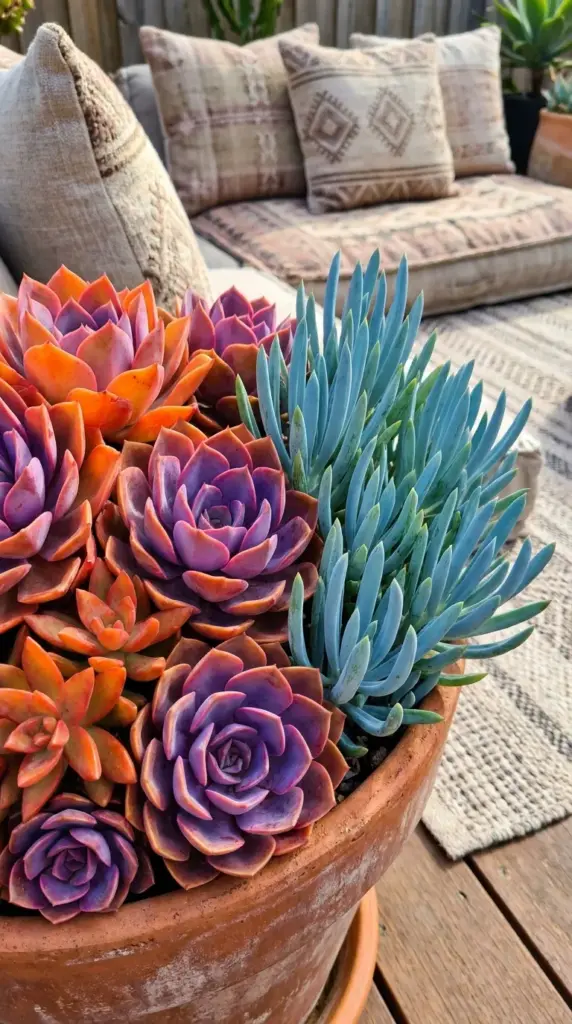
I used to think all succulents were basically just different shades of dull green. Boy, was I wrong, and my early gardens looked like a giant, boring bowl of tossed romaine lettuce.
Then I discovered how high-end designers use basic color wheels to make these tiny plants absolutely explode visually.
Playing with Opposite Hues and Modern Gradients
If you want that instant, jaw-dropping pop, you need to experiment with complementary plant colors.
Try pairing a vibrant, fiery orange accent plant right next to some cool, powdery blue chalksticks layout. It creates an immediate, striking contrast that draws the eye right in.
On the flip side, if you love a clean, minimalist look, try a monochromatic gradient.
You can cluster varying shades of soft, pale greens and sempervivum varieties that fade into delicate blush pinks for a super trendy, bohemian garden aesthetic.
Triggering Sun-Stress Colors Naturally
Now, here is the coolest trick in the book that feels like absolute magic: sun stress color change.
Many beginners panic when they hear the word “stress,” but for succulents, a little controlled environmental stress is actually a wonderful thing.
By carefully adjusting their sunlight exposure, you can safely trigger their natural defense mechanisms. This causes their tips to turn brilliant shades of neon pink, deep red, and rich purple.
Just make sure to acclimate them slowly so you don’t accidentally scorch their leaves in the harsh afternoon heat.
Once you’ve mastered these incredible color tricks, you’re fully ready to tie your whole master design together into a gorgeous, finished space. Hit that next button right below because I’m about to show you how to wrap up all these pro secrets into a final, show-stopping blueprint!

GIPHY App Key not set. Please check settings