

 The Home Growns
How to Identify Dahlia Bud Rot Before It’s Too Late
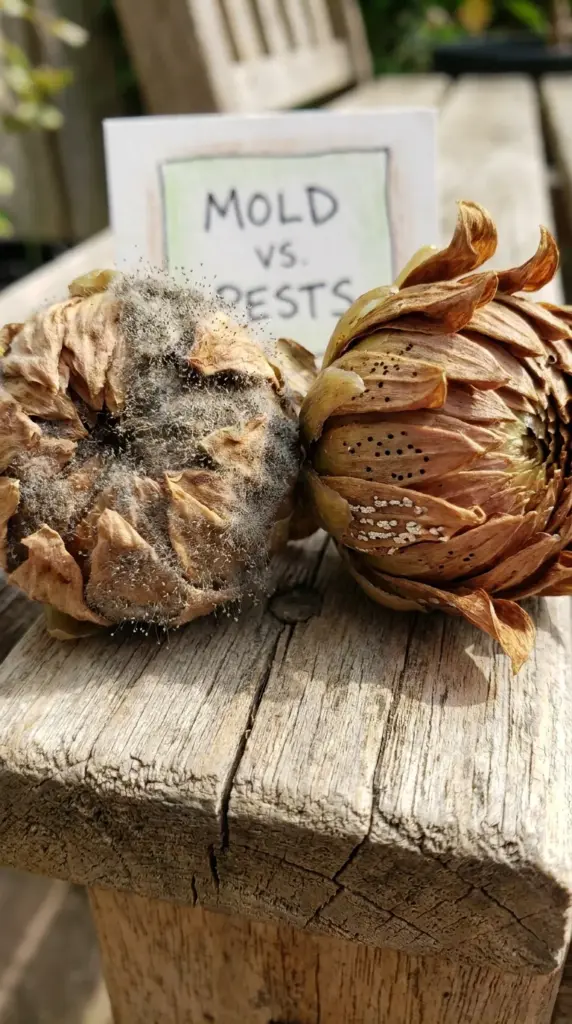
I’ll never forget the morning I noticed my favorite café au lait dahlia looking a little sad and immediately blamed earwigs, blasting it with bug spray. It was a total rookie mistake that cost me three beautiful blooms because it wasn’t bugs at all—the rot had already taken hold.
The Early Warning Signs You Can’t Ignore
When you’re out doing your morning plant care routine, you need to look really closely at the very base of those tight little green balls. The first real indicator of trouble isn’t a massive blast of mold, but rather tiny, innocent-looking brown flower buds with water-soaked spots.
If you squeeze the bud gently between your fingers and it feels squishy like a bruised peach instead of firm, you’re dealing with flower bud rot. Within a day or two, that spot will expand and develop a signature fuzzy gray coating that looks exactly like old bread mold.
Fungal Rot vs. Pest Damage: Telling Them Apart
It is super easy to mix up fungal issues with damage caused by common dahlia pests like thrips, earwigs, or tarnished plant bugs. I used to get them confused all the time until I learned this one simple trick to save my sanity.
Insects are hungry, so thrips damage dahlia buds by sucking the sap, leaving distorted, crinkled, or chewed edges with tiny black dots of waste. On the flip side, botrytis blight doesn’t chew anything; it just liquefies the tissue into a uniform, soggy brown mess from the inside out.
Now that you know exactly how to diagnose this nasty mold before it breaks your heart, we need to shift into emergency medic mode. Hit that next button right below because I’m about to walk you through my personal quick-fix guide to stopping the spread and saving your remaining dahlia blooms!

GIPHY App Key not set. Please check settings