

 The Home Growns
4. Strategic Liquid Fertilizing During the Active Growing Season
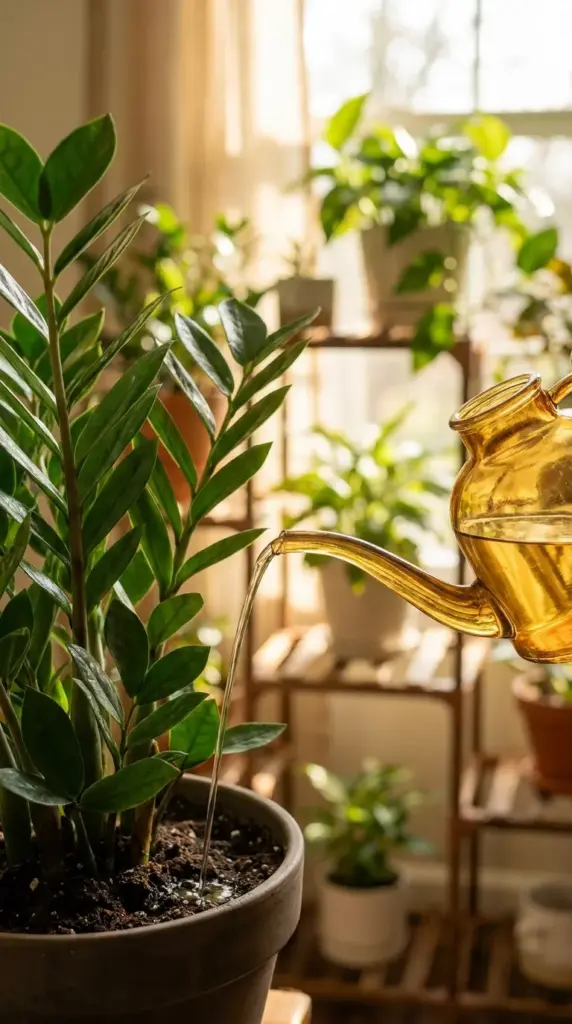
I used to think plant fertilizer was some kind of magical potion that could instantly fix a sad, stagnant plant. One winter, out of pure desperation to see a single new leaf, I poured a super strong, undiluted dose of chemical food straight onto my sleeping ZZ.
Oh man, it was a total disaster. The tips turned a crisp black color within days, and I learned the hard way that less is definitely more when it comes to feeding these unique beauties.
Picking the Perfect Formula for Cell Division
When your ZZ is in its active growing season, it needs the right nutrients to fuel rapid cell division and produce those massive new stalks. I always recommend a gentle, high-quality liquid fertilizer with a balanced 10-10-10 or 20-20-20 NPK ratio.
This ensures your indoor gardening efforts provide an equal mix of nitrogen for lush foliage, phosphorus for strong rhizomes, and potassium for overall plant health. Organic options like worm compost tea also work incredibly well if you want a safer, more natural approach.
Dilution and Timing for Massive Energy
The golden rule for feeding a ZZ plant is to only fertilize during the warm spring and summer months when the plant is naturally moving. Completely pause all feeding during the late fall and winter, because trying to force growth when the plant is resting will only cause permanent root burn.
Even during the peak growing season, always dilute your liquid plant food to half or even a quarter of the strength recommended on the bottle. This gives your plant a steady, safe stream of energy without overwhelming its sensitive root system.
Now that your ZZ is fully fed and energized, we need to make sure its leaves can actually absorb enough sunlight to process all those amazing nutrients, so hit that next button below because I’m showing you a weirdly satisfying cleaning routine that acts like an instant turbo-boost for photosynthesis.



GIPHY App Key not set. Please check settings