

 The Home Growns
Eastern Prickly Pear (Opuntia humifusa)
A couple of winters ago, I left one of my cacti out on the back deck during a freak ice storm, completely forgetting to bring it into the garage. When I found it buried under a thick layer of snow, it looked like a sad, shriveled, wrinkled green pancake, and I honestly almost threw it straight into the compost bin.
That wrinkled little plant was an Eastern prickly pear, and it completely blew my mind by bouncing back perfectly the second spring arrived.
The Ultimate Cold-Weather Survivor
The Eastern prickly pear (Opuntia humifusa) is an absolute legend because it is one of the few cacti native to the eastern United States. Unlike almost every other desert variety out there, this incredibly tough plant can easily survive crazy sub-zero winter temperatures all the way down to USDA Zone 4.
To protect itself from freezing, the plant naturally sheds water and shrivels up in the autumn. This trick makes it look totally dead, but it actually keeps its cellular walls from bursting during a deep freeze, allowing it to perk right back up when the ground thaws.
Bright Yellow Blooms and Low-Growing Habit
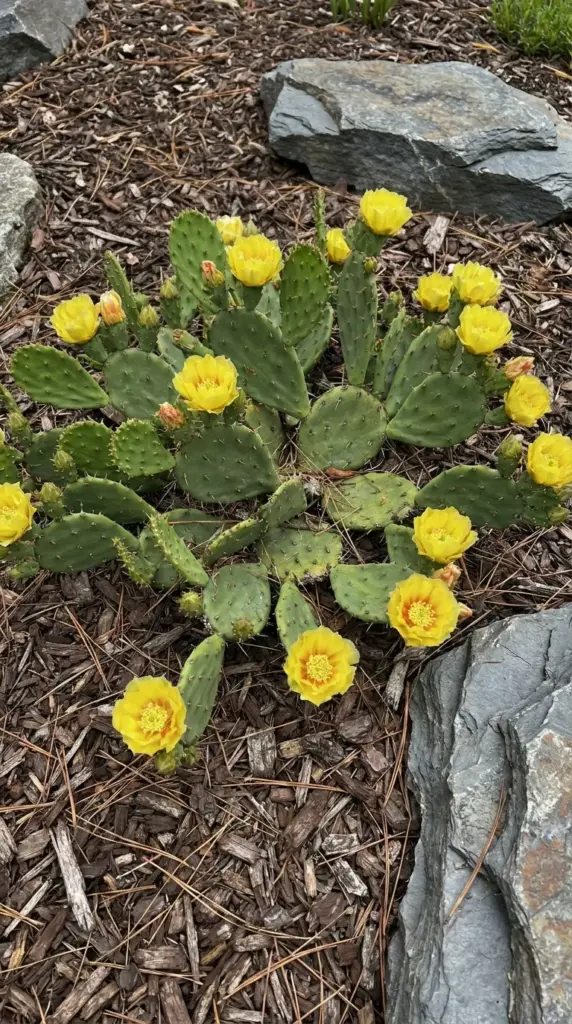
It features a low, creeping habit that only reaches about 6 to 12 inches tall, making it an exceptional option for a native rock garden or a tough pathway border. In June, it bursts to life with gorgeous, bright sulfur-yellow blossoms that often feature a stunning, warm reddish center.
It completely craves full sun and absolutely thrives in poor, sandy, or rocky soil where other perennials would completely shrivel and die. It is the ultimate hands-off plant for anyone dealing with harsh, unpredictable northern climates.
Now that you know all the best varieties to choose from, you are probably wondering how to actually arrange them so your yard looks like a high-end designer landscape instead of a messy desert wildland, so hit that next button below because I’m breaking down my absolute favorite design and styling tricks next.


GIPHY App Key not set. Please check settings