

 The Home Growns
Fix #3: Get Your Plant Filter Working Again
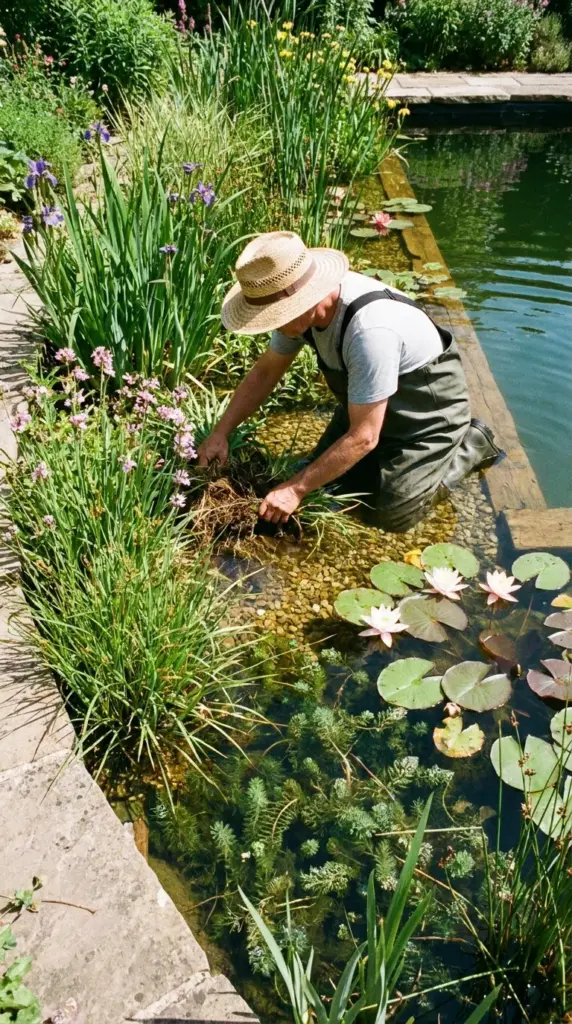
Check whether your plants are thriving or just existing
A healthy wetland filter should look active, rooted, and seasonally vigorous. If your plants are sparse, yellowing, floppy, or packed too tightly, they may not be removing enough nutrients.
This is common after a few seasons when roots thicken and water flow through the zone slows down. Pretty from the patio does not always mean effective.
Use the right plant mix
I like a layered mix of oxygenating pond plants, marginal plants, and a few surface-covering species. Depending on region and design, that might include rushes, sedges, pickerel, iris, water mint, and controlled amounts of water lilies.
The goal is nutrient uptake, root surface area, and light competition. In 2026, I’m seeing more homeowners add native marginals for both filtration and pollinator value, which I love.
Prune, divide, and thin with care
Overgrown roots can choke flow paths in gravel-based systems. Divide aggressive plants, remove dead foliage, and thin overcrowded sections so water can move through the zone again.
Don’t strip everything at once, though. If you over-clean, you can weaken the natural pool ecosystem and trigger even more instability.
Support beneficial biology
Adding beneficial bacteria or a microbial water treatment can help after heavy cleanup, especially if sludge was removed or the plant zone was disturbed. Think of it as support, not a substitute for design and maintenance.
Once the plant filter wakes back up, clarity often improves in a very satisfying way. Hit the next button below, because there are a few safe ways to clear green water without reaching for harsh chemicals.



GIPHY App Key not set. Please check settings