

 The Home Growns
Fix #1: Remove the Nutrients Feeding the Bloom
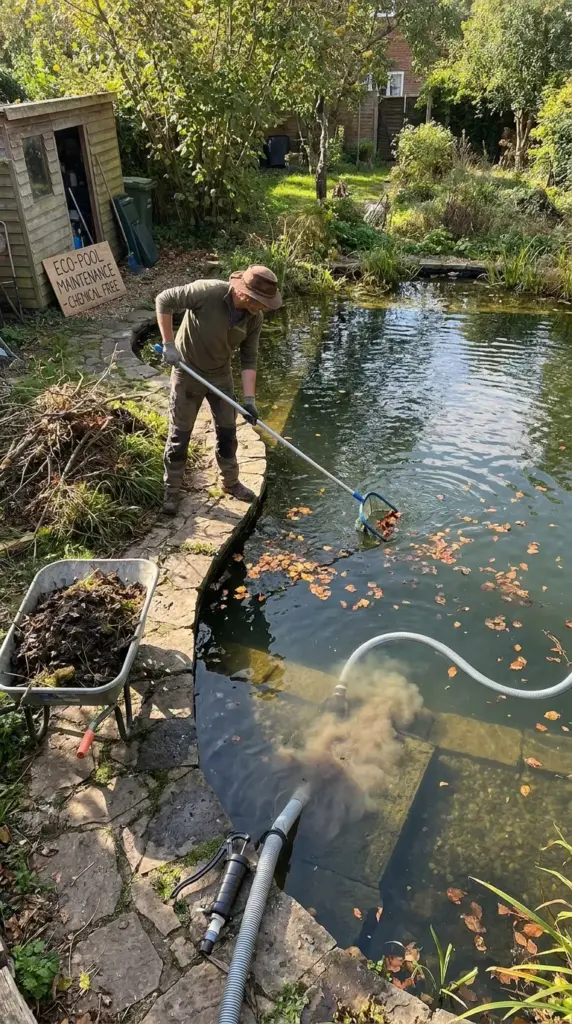
Skim, net, and vacuum the boring stuff
I know it’s not glamorous, but pool debris removal works. Skim daily, net out leaves, and use a gravel vacuum or pond-safe vacuum to remove settled muck from the bottom.
That organic debris in the pool is algae food. If you leave it in place, you’re basically catering the bloom.
Deal with the sludge layer
Bottom sludge is where many green-water problems keep rebooting. You can improve water clarity for a week, then the hidden muck leaks nutrients back into circulation.
Pay special attention to shelves, edges, and behind steps. Also check bottom drain maintenance if your system has one, because partial clogs reduce removal power fast.
Stop outside nutrients from entering
This is the sneaky part. Rainwater runoff control matters more than most people realize, especially if nearby beds are mulched, fertilized, or topped with compost.
Redirect downspouts, edge the pool perimeter, and keep lawn fertilizer far from splash zones. I’ve even seen dust from fresh topsoil trigger a bloom.
Watch fish, pets, and nearby beds
If your pool includes fish, overfeeding can spike nutrient loads fast. Nearby veggie beds, compost piles, and even potted annuals can also contribute through runoff or windblown material.
Once you cut the food source, algae loses momentum. Hit the next button below, because now we’ll speed up the system by improving circulation and oxygen.


GIPHY App Key not set. Please check settings