

 The Home Growns
The 5 Biggest Reasons Natural Pools Turn Green
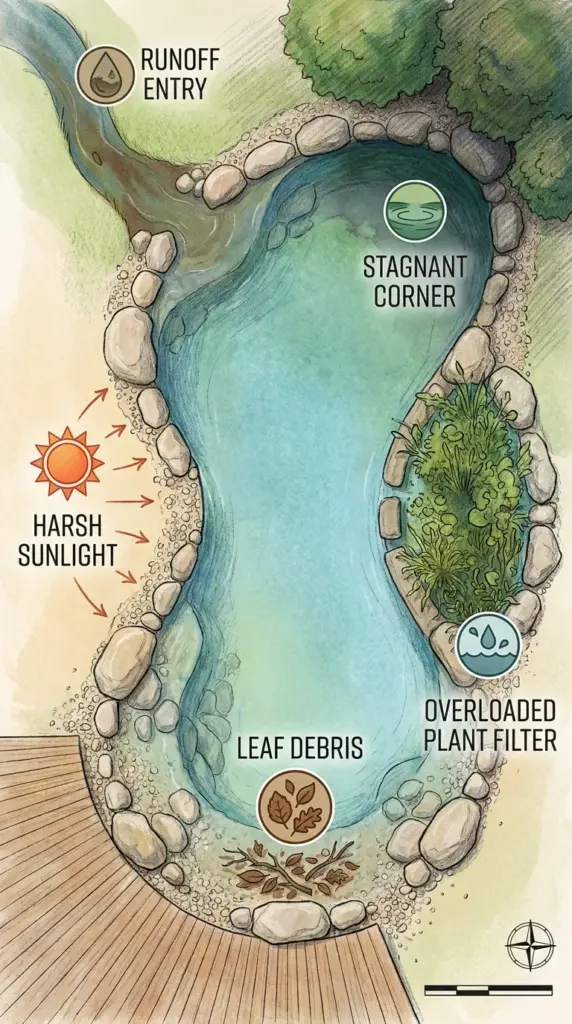
Too much sunlight and heat
Algae absolutely loves warm, bright water. If your swimming zone gets intense afternoon sun, especially in cities with long hot summers like Dallas-Ft. Worth or Atlanta, blooms can take off fast.
This gets worse in shallow areas where water heats quickly. I’ve had clients swear their pump was the issue, then we added partial shade and the bloom pressure dropped a lot.
Poor circulation and stagnant corners
Weak water circulation creates quiet little algae nurseries. If your pump flow rate is too low or your returns are poorly aimed, you’ll get stagnant water problems and dead zones.
Look for green buildup on steps, corners, and behind ladders or rocks. Those are the spots where suspended algae and sludge settle in first.
Extra nutrients from the outside world
Leaves, pollen, grass clippings, pet traffic, body oils, soil, mulch dust, and rainwater runoff control failures all dump fuel into the water. That fuel becomes algae food.
The big offenders are usually pool phosphate levels and nitrate buildup. Even “clean” yards can send enough nutrient-rich dust and debris into a pool to trigger pea soup water.
An overloaded plant zone
Your wetland filter or bog area can only process so much. If the aquatic plants for filtration are sparse, overcrowded, root-bound, or shaded out, the system loses power.
A tired bog filter can look fine from the edge and still be underperforming. That’s one of the sneakiest problems I see.
Sludge hiding where you can’t see it
Pool sludge buildup at the bottom acts like a slow-release fertilizer puck. It keeps feeding algae even when the surface looks clean.
And yep, this is the part most people skip because it’s messy. Hit the next button below, because now I’ll show you how to tell whether you’re dealing with algae, debris, or straight-up filtration failure.

GIPHY App Key not set. Please check settings