

 The Home Growns
How to Tell If the Problem Is Algae, Debris, or Filtration Failure
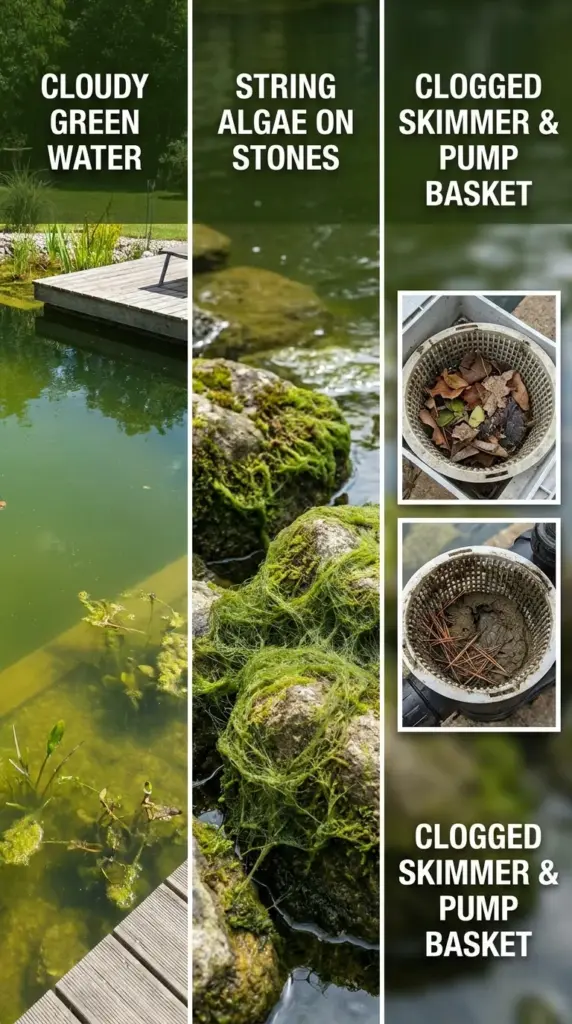
Look at the type of green
If the whole pool looks cloudy green, that’s usually suspended algae. If you see long fuzzy strands on walls, rocks, or plant edges, you’re probably dealing with string algae.
If the water is brown-green and murky with visible particles, you may have more debris than algae. That difference matters, because cleanup steps change depending on the cause.
Use your nose and your hands
Healthy natural pools smell earthy or neutral. If you get swampy or sour odors, I start thinking low oxygen, trapped sludge, or decaying organic matter.
Run your hand along a wall or stone edge. A slippery coating often means biofilm and early imbalance, while thick slime plus murk usually signals filtration is lagging behind.
Inspect the working parts
Check the natural pool skimmer, pump basket, intake screens, return jets, and any gravel or filter chambers. A partially clogged line can slash performance even if the system is technically “running.”
Then inspect the regeneration zone. If plants look yellow, root-bound, or buried in muck, your biological filtration may be stalled.
Watch how debris moves
Toss in a few leaves and watch where they drift. If they collect in the same quiet corner every time, you’ve found a circulation issue.
I learned this the annoying way years ago with a client pool that stayed green in one bay only. We changed return direction by a few degrees, and the whole pool started behaving better.
Now that you know what to look for, don’t guess at the fix yet. Hit the next button below, because the smartest move is to test the water before you touch anything else.


GIPHY App Key not set. Please check settings