

 The Home Growns
What It Cost Me Compared With Traditional Fencing
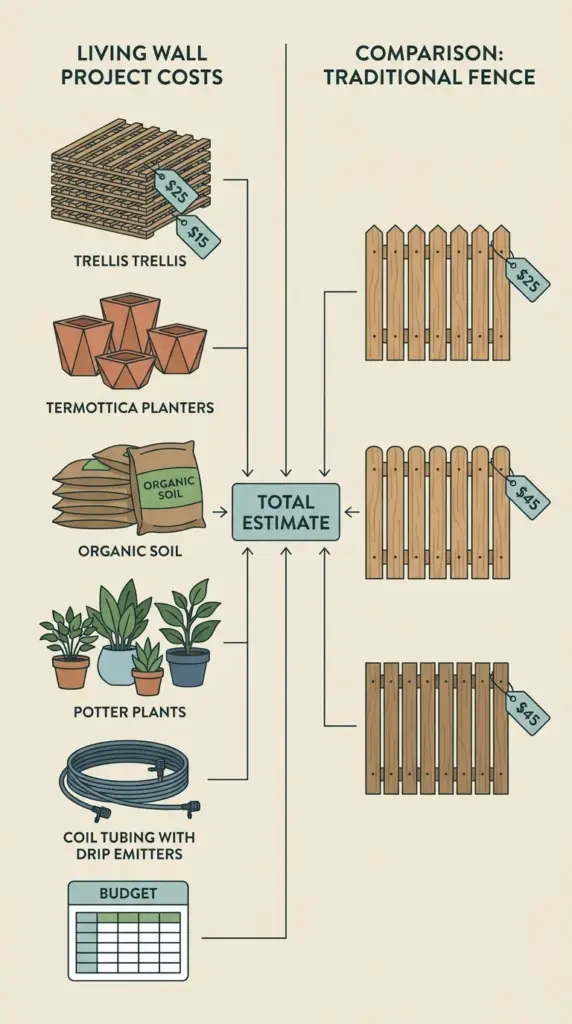
My costs were spread across a few categories
My budget went into the frame, anchors, planters, soil, plants, ties, and irrigation. In broad terms, a DIY eco-friendly fencing alternative like this can range from a few hundred dollars for a small screen to several thousand for a larger, polished setup.
That range is huge because materials and plant sizes change everything. Mature plants cost more, but they also buy you time.
Upfront cost vs long-term tradeoffs
A basic traditional fence often gives instant privacy faster. But a living wall fence gives beauty, biodiversity, and design value that a plain panel just doesn’t.
Ongoing costs also look different. Instead of staining boards, you’re paying for water, fertilizer, replacements, and seasonal care.
Where I saved and where I should have spent more
I saved money by doing the install myself and starting with younger plants. I probably should have spent a bit more on irrigation parts from the beginning instead of trying to piece things together cheaply.
That would’ve saved me some very sweaty mid-summer frustration. Lesson learned.
Is it actually budget-friendly?
It can be, especially if you build in stages. A targeted privacy landscaping on a budget plan is often smarter than trying to screen every inch at once.
If you want instant, full-height, zero-gap privacy, a fence may win on speed. But if you want a long-term biophilic backyard design feature, the value equation shifts.
So was it better than a fence in the end? For me, yes. But there are a few cases where I’d still tell someone to go traditional, so hit the next button below.

GIPHY App Key not set. Please check settings