

 The Home Growns
The Mistakes I Made and What I’d Do Differently
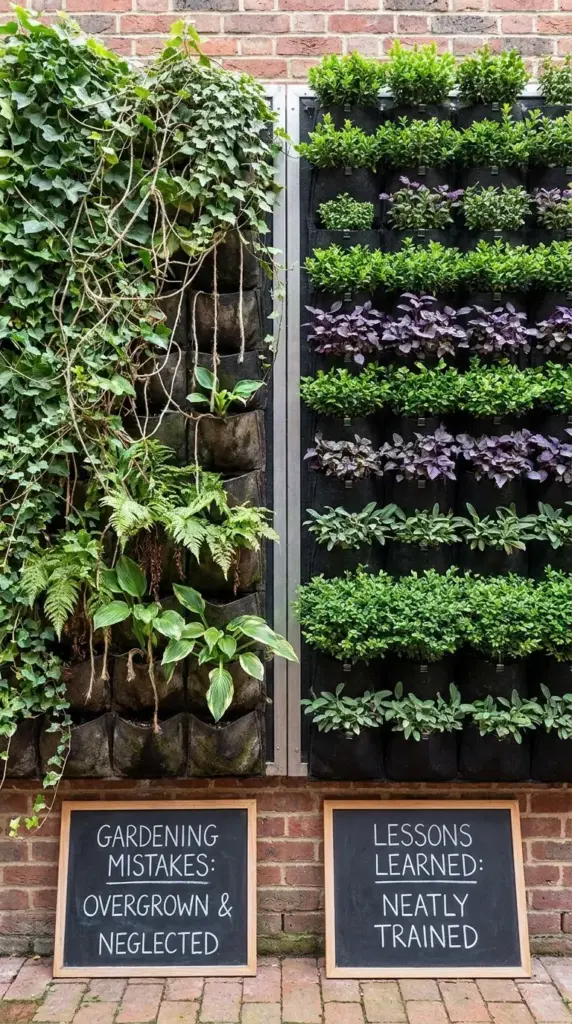
I underestimated how fast some plants would move
One plant barely grew, and another acted like it had a personal mission to swallow the whole screen. That’s classic gardening, honestly.
Now I balance plant vigor more carefully. A mixed container privacy planting needs teammates, not bullies.
I learned support and spacing the hard way
One section needed stronger attachment points way earlier than I expected. Once growth thickened, the load increased fast.
I’d also leave a little more room between certain plants next time. Airflow matters, especially in humid summers.
I didn’t fully respect pruning at first
I thought I could let everything “grow naturally” and then tidy it later. Cute idea.
A low-maintenance living wall still needs regular guiding, tying, and seasonal cleanup if you want it to stay beautiful instead of shaggy.
Version two would be smarter from day one
If I rebuilt it tomorrow, I’d add irrigation earlier, choose fewer plant varieties, and install one more support line at the start. I’d also photograph the wall monthly, because changes happen slowly and then all at once.
The good news is the project still ended up worth it. But let’s talk money next, because that’s the part everybody wants the real truth on, so hit the next button below.

GIPHY App Key not set. Please check settings