

 The Home Growns
Soil, Water, Mulch, and Drainage for Healthy Side-Yard Hydrangeas
Build Better Soil First
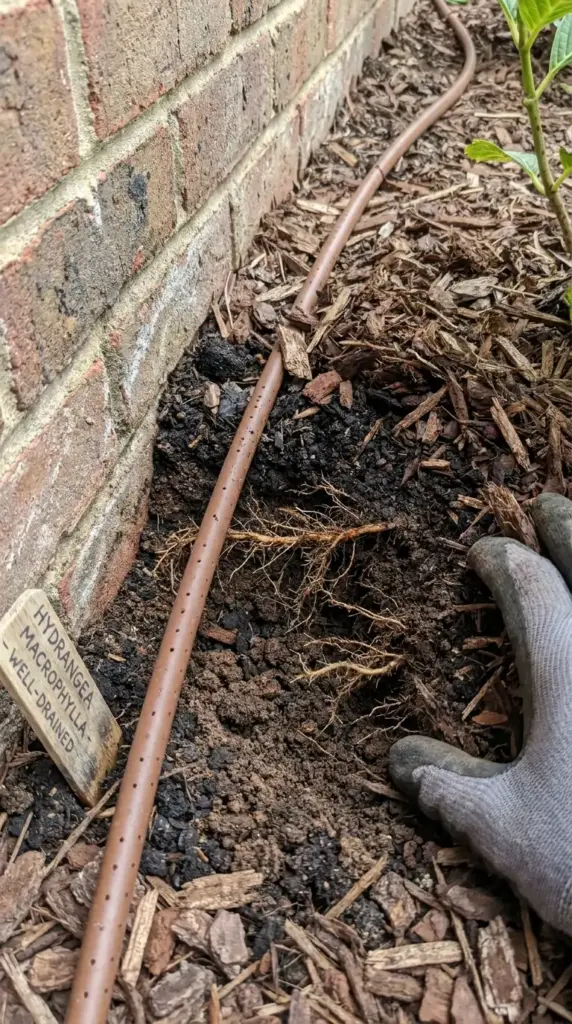
Hydrangeas like well-drained loamy soil with organic matter. In side yards, I often find the top layer dry and dusty while the lower layer stays compacted and wet.
That’s why I add compost and loosen the bed deeply before planting. It gives roots a better shot at settling in evenly.
Water Deeply, Not Constantly
A narrow bed dries out differently than an open garden bed. Heat reflects off walls and fences, and roots compete with nearby foundations, paving, or old shrubs.
I’m a huge fan of drip irrigation for shrubs here. It waters the root zone more evenly and helps reduce leaf disease compared with overhead spray.
Mulch Matters More Than People Think
A few inches of mulch can help regulate root temperature, retain moisture, and reduce splashing soil. In side yards with brick wall heat or hot fencing, that matters a lot in summer.
Just keep mulch pulled back from the stems. I know this sounds basic, but mulch volcanoes are still out here causing chaos.
Watch for Stress Signals Early
Yellow leaves, drooping, or poor bloom performance often point to drainage issues, watering inconsistency, or too much heat. A little troubleshooting early saves a lot of sad midsummer guesswork.
And finally, we need to protect your investment with smart pruning and a few avoidable mistakes, so hit the next button below for the last section.

GIPHY App Key not set. Please check settings