

 The Home Growns
The Best Companion Plants for Hydrangeas in Tight Beds
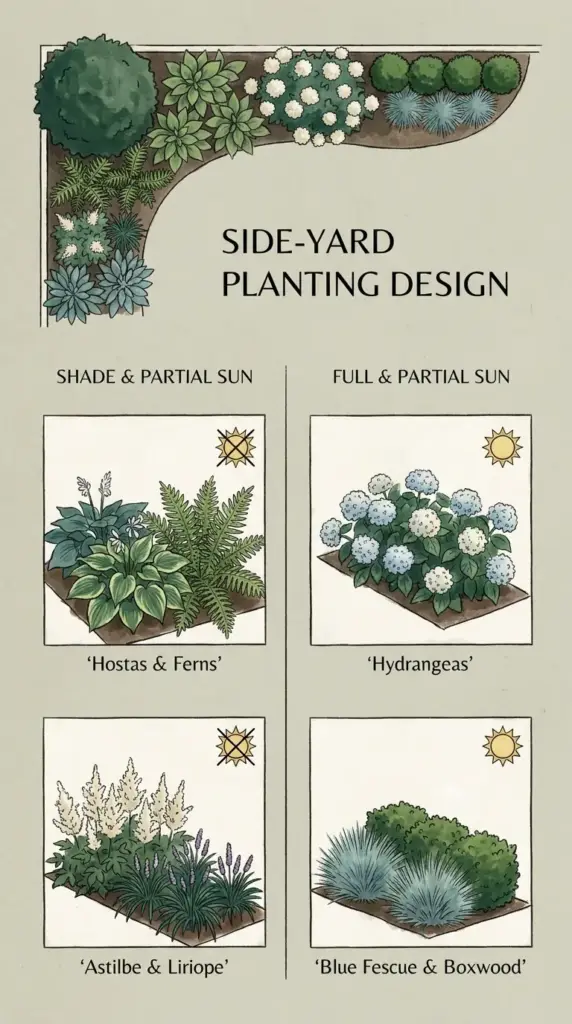
Best Companions for Shade and Part Shade
For shadier side yards, I rely on hostas, ferns, and astilbe. They bring contrast in leaf shape and texture without competing too hard for attention.
Hostas are especially useful when you want broad leaves to soften the base of shrubs. Just use smaller or medium forms, not giant ones that sprawl into the walkway.
Best Companions for Brighter Spots
In sunnier or more exposed side yards, I like blue fescue, liriope, and tidy evergreen forms. These work well with hydrangea along fence layouts because they keep the front edge neat.
If you want a sharper look, small boxwoods can add structure. Just don’t pack them too close to the hydrangea roots.
What to Avoid
Avoid thirsty, aggressive spreaders or big perennials that bulk up fast. In a narrow side yard, one wrong companion can steal air circulation and make the whole bed feel crowded.
I’m also careful with vines. A climbing hydrangea fence look can be beautiful, but in a truly tight side yard it often becomes more maintenance than most people want.
Less Is Usually More
You really do not need ten plant types here. A strong side-yard planting often uses one hydrangea, one edging plant, and maybe one textural companion.
Up next, I’ll show you the spacing math that keeps all these pretty ideas from turning into a maintenance mess, so hit the next button below.

GIPHY App Key not set. Please check settings