

 The Home Growns
Spacing, Layering, and Path-Clearance Rules That Matter
Start With Walkway Clearance
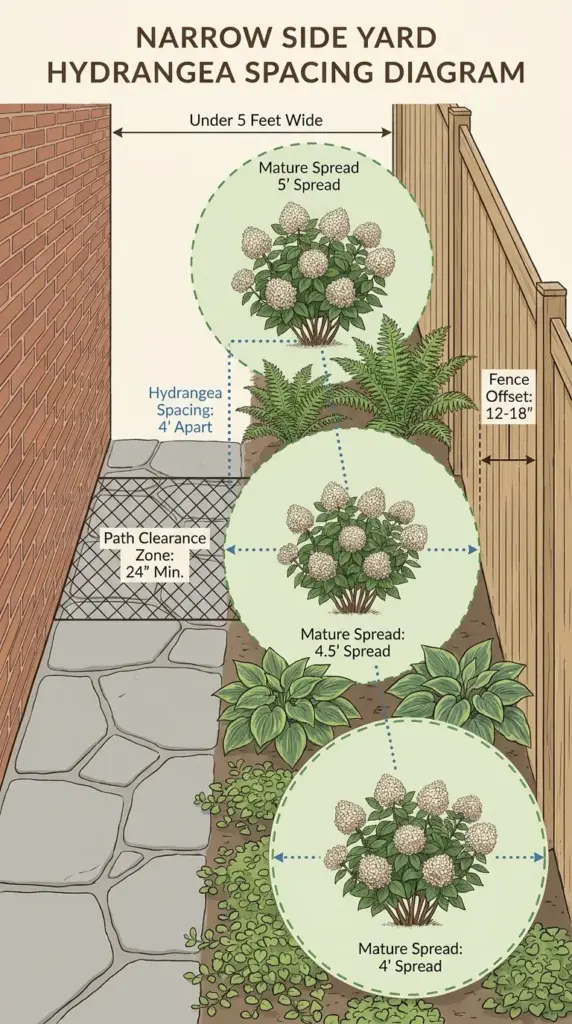
Before you plant anything, decide how much open walking space you need. In a side yard under 5 feet wide, even a few inches matter a lot.
I like to picture the plant at mature size after rain, not on a cute dry spring day. Wet blooms and leaves always take up more room.
Use Realistic Spacing
For many compact hydrangeas, hydrangea spacing 3 to 4 feet apart works well in a row. If you want a denser look, some gardeners plant closer, around 30 to 36 inches on center, but only when the mature spread supports it.
That tighter spacing can look lush faster, but it reduces airflow. So there’s always a trade-off.
Layer With Intention
Use the tallest shrubs in back if the bed has a fence or wall. Then keep edging plants low so the front doesn’t swell into the walkway.
This is where staggered shrub layout can help in slightly wider side yards. In ultra-skinny ones, though, a single row is usually cleaner.
Don’t Plant Too Close to the House or Fence
Leave room for airflow around stems and for mature growth away from siding, masonry, or wood fencing. Hydrangeas shoved too close to hard surfaces often dry out faster on one side and mildew on the other.
Next, we need to talk about what’s happening below the surface, because soil and drainage are the secret reason some side-yard hydrangeas thrive and others pout, so hit the next button below.


GIPHY App Key not set. Please check settings