

 The Home Growns
2. Amend Soil for Flawless Drainage
I remember digging up my first real city garden plot, thinking that heavy, sticky clay dirt would be totally fine for my new plants. Boy, was I wrong—after a single heavy rainstorm, that patch looked like wet pottery clay and smelled like a literal swamp.
That trapped moisture completely suffocated my roots, teaching me the hard way that growing dahlias requires a completely different approach to dirt.
Spotting the Heavy Soil Trap
Before you put anything in the ground, you need to look closely at your backyard soil structure. If your dirt stays gooey and forms a tight, hard ball when you squeeze a handful of it, you are dealing with heavy clay that will trap water right around your fragile dahlia tubers.
This standing water cuts off oxygen to the root zone, which causes a nasty condition called tuber rot that can destroy your entire investment before summer even hits. To get those massive summer blooms, your soil needs to be loose enough that water can drain through it completely within just a few minutes.
The Ultimate Three-Part Rot-Proof Recipe
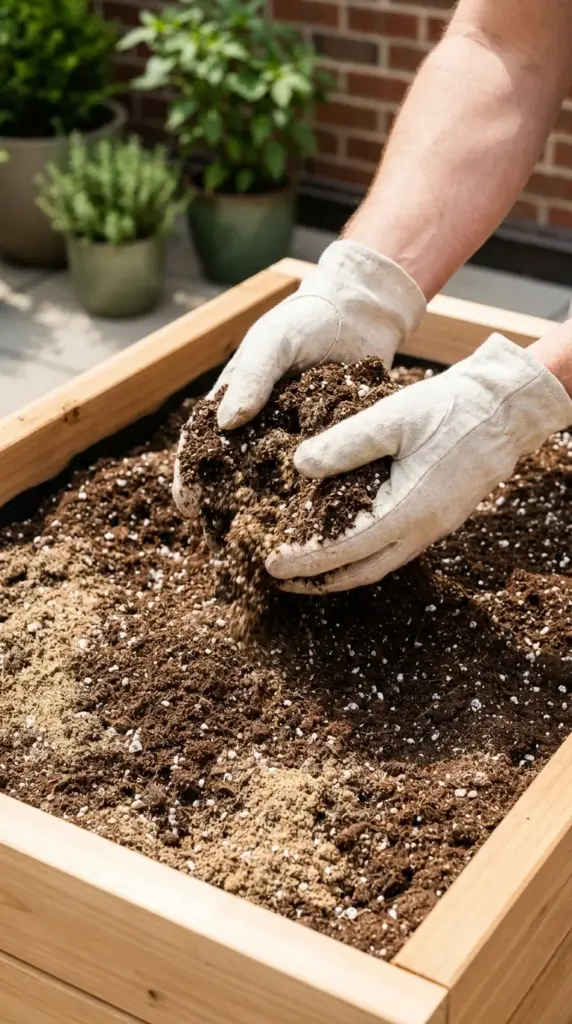
Fixing heavy urban soil is actually super easy once you know the exact recipe to break up that dense texture. I swear by a simple, balanced mix that creates the absolute perfect well-draining soil environment for heavy feeders.
You want to blend your native soil with a 1:1:1 ratio of coarse sand, perlite, and rich organic compost. The coarse sand and perlite create tiny, permanent air pockets so the roots can actually breathe, while the compost supplies vital nutrients without compacting.
Just work this blend down about 10 to 12 inches deep into your flower beds before planting, ensuring a completely fluffy, airy foundation. Now that your dirt is beautifully prepped and ready to go, we need to make sure you don’t bury your plants too deep or too shallow, so smash that next button because I am sharing the exact depth measurements you need for total success.



GIPHY App Key not set. Please check settings