

 The Home Growns
5. Turn Full-Height Fencing Into a Living Trellis Wall
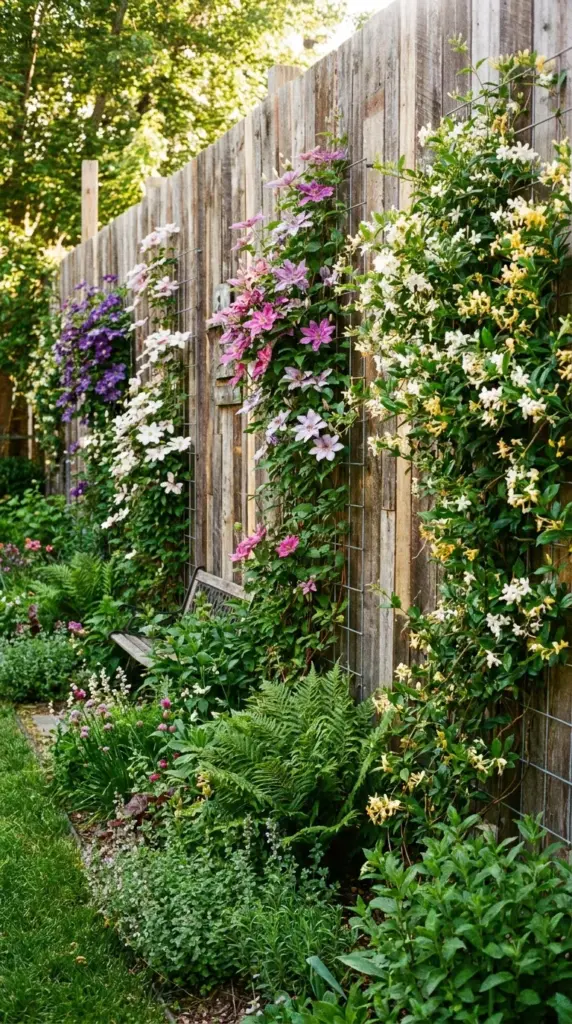
Add support for climbing plants
If you’re building a trellis fence design, attach wire grid, cattle panel sections, or wood cross supports right onto the reclaimed structure. That gives vines something to grab without forcing them to cling directly to every board.
I prefer spacing the trellis layer slightly off the wood. Better airflow means less trapped moisture and fewer rot issues later.
Best climbers for privacy and beauty
For 2026 garden trends, people are still loving star jasmine, climbing roses, clematis, and honeysuckle for soft screening. In colder zones, hardy clematis and climbing hydrangea are safer bets than anything too tropical.
If you want fast summer coverage, annual vines like black-eyed Susan vine or hyacinth bean can fill in quickly. Just know “fast” usually means more trimming, and yep, I’ve regretted underestimating that.
Sun, airflow, and watering
Most flowering vines want at least 6 hours of sun for the best bloom show. Full-height planted fences also need good airflow so leaves dry faster and fungal issues stay lower.
Water at the base, not all over the foliage if you can help it. A drip line or soaker hose keeps things easier in hot spells.
Keep the fence strong as plants mature
Mature vines get heavy. Wisteria especially can turn from charming to absolute chaos if the structure isn’t built for the load.
Check fasteners each season and prune with intention. In the next section, I’ll show you how to add beauty lower down too, with planter boxes that make a fence feel lush from top to bottom, so hit the next button below.

GIPHY App Key not set. Please check settings