

 The Home Growns
12. Finish With Lighting, Stain, and Weather Protection
Prep and seal reclaimed wood properly
Before sealing, brush off dust, sand splinters, and replace any soft or cracked boards. Then use an exterior wood sealer or stain rated for outdoor use and recoat based on exposure, usually every 2 to 4 years.
If the fence gets full sun all day, expect to maintain it a little more often. Sun is rough on wood, even when the project starts out gorgeous.
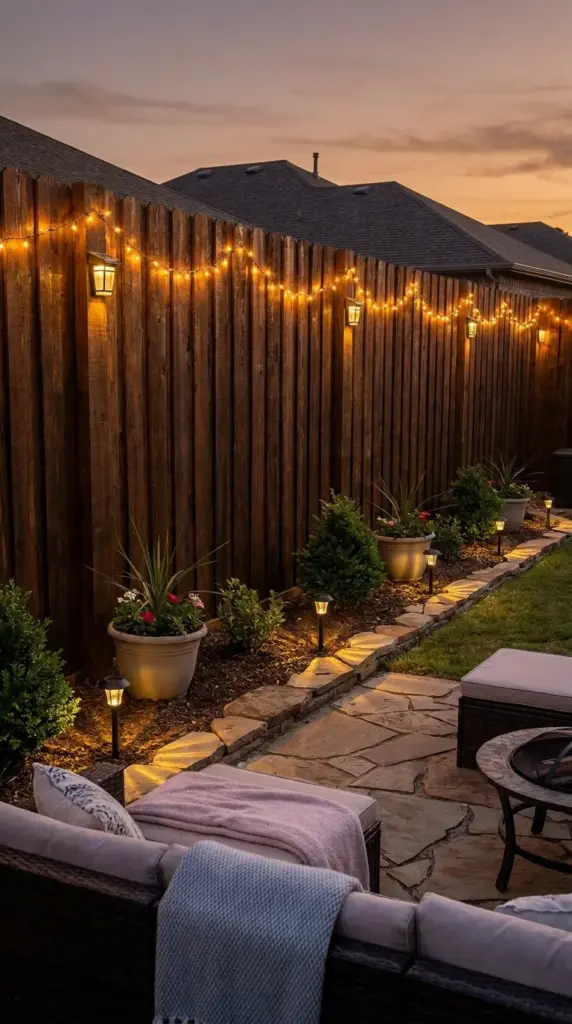
Add lighting for function and mood
Lighting makes a huge difference in how a fence feels at night. Solar fence lights, wall sconces, and warm string lights can turn simple boards into a real outdoor backdrop.
I like placing lights near gates, seating areas, and planters. It boosts safety, but it also creates that cozy backyard glow everybody wants.
Follow a simple seasonal maintenance routine
Check hardware in spring, wash the fence in early summer, trim plants back in midseason, and inspect for moisture damage in fall. In snowy climates, keep wet leaves and piled snow from sitting against the boards too long.
That little routine saves money later. Most wood fence disasters start as tiny ignored issues.
Budget upgrades that look custom
Fence caps, post toppers, coordinated planters, and a neat gravel border along the base all help a budget fence makeover look intentional. These are the finishing touches that quietly say, “Yep, I planned this.”
If you’ve been thinking about building a reclaimed wood fencing project, I hope this gave you real ideas you can actually use. Pin this for later, share it with a DIY-loving friend, and drop a comment below telling me which fence style you’d try first.


GIPHY App Key not set. Please check settings