

 The Home Growns
Mistake 8: Neglecting to Deadhead Fading Blooms Regularly
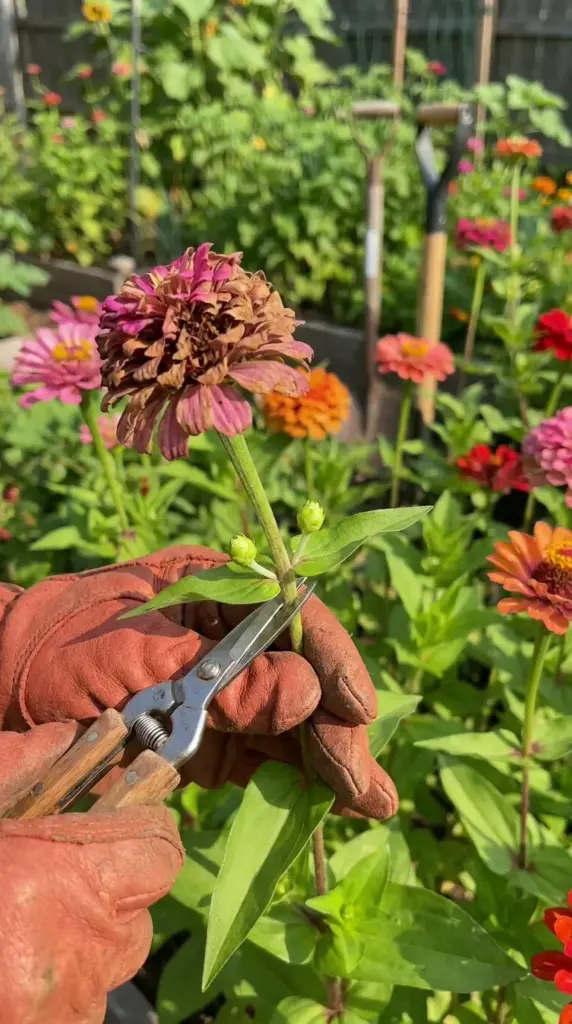
I remember feeling so proud of my first giant flower that I left it on the stem for weeks just to show it off to my neighbors. Sadly, my entire garden suddenly stopped producing new buds, and my beautiful patch ground to a complete halt.
How Spent Blooms Signal the End of Production
When you leave spent blooms sitting on your plants, you are accidentally sending a major biological shutdown signal. The zinnia thinks its job for the season is completely done, so it stops growing and pours all its energy into making seeds.
This mistake can drop your overall bouquet yield by more than half before August even hits. If you want a non-stop harvest, learning how to deadhead zinnias is absolutely crucial for keeping the plant in active production.
Mastering the Cut-and-Come-Again Trimming Technique
To trigger the famous cut-and-come-again cycle, you can’t just pull off the crunchy petals with your fingers. Take a sharp pair of clean snips and follow the stem down right above the next node where you see fresh side buds forming.
Making a clean slice right there forces the plant to aggressively send out two brand-new flower stems within days. Regular trimming keeps your zinnia care routine highly productive and fills your vases all summer long.
Now that you know how to keep those flowers popping with your pruners, hit that next button below because we need to chat about a hidden fertilizer trap that gives you massive green leaves but absolutely zero buds.


GIPHY App Key not set. Please check settings