

 The Home Growns
Build a Strong Base That Keeps Bricks in Place
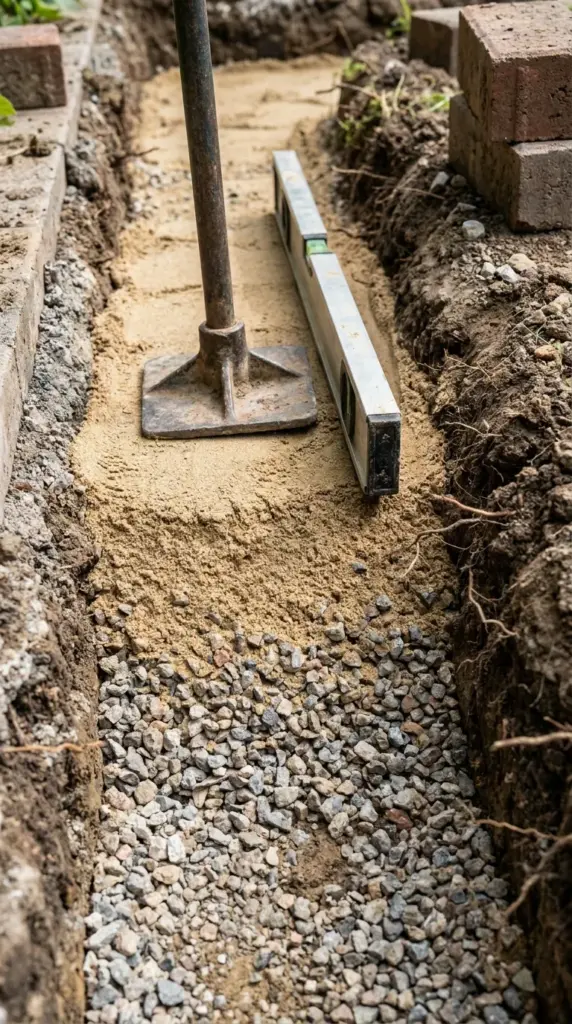
Choose sand, gravel, or both
For small decorative edging in stable soil, compacted sand may be enough. For wetter spots or areas with heavy clay, use a thin gravel base under a layer of sand.
That combo improves drainage for garden border setups and helps with frost heave prevention. In cold climates, that matters a lot.
Level the trench carefully
Add base material in thin layers and check with a level often. This is the step that gives you clean lines instead of the up-and-down “homemade” look nobody wants.
Take your time with leveling pavers. A few extra minutes here can save an hour of redoing crooked sections later.
Tamp for a firmer foundation
Compact the gravel or sand with a hand tamper or the flat end of a heavy tool. You want the surface firm, not fluffy.
If the base feels soft underfoot, it’s not ready. I’ve learned that the annoying extra tamping step is almost always worth it.
Think about drainage from the start
Avoid trapping water against the border. If your bed sits low or stays soggy, slope the base slightly and choose materials that drain well.
This also helps reduce weed pressure and mud splashing near the edging. Hit the next button below, because now comes the fun part: actually laying the bricks and making the pattern look intentional instead of random.


GIPHY App Key not set. Please check settings